All posts by JustRachel

This is me trying to make it as a writer... you all haven't seen anything yet

Empty words – a poem

“What does it mean?” He asked.

“I don’t know” I replied

I just liked how it sounded

Liked how the words tasted

Liked how they rolled off my tongue when I spoke them sweet and soft.

“Does it matter what it means?” I asked

“I suppose it doesn’t,” he answered “since I’m the only one who cares.”

– RM

Photo by Dario Fernandez Ruz on Pexels.com

Reflection

My best friend sends me poems. For a while, he sent one every day, two if he was going through it, three if s*** really hit the fan. In the last month or two, the consistency has slowed. It ebbs and flows with his free time and creative energy, but this week I’ve gotten more poems than there are days.

See, my friend lives in Rhode Island. He works in higher education—not at Brown University, but in a state that small, that kind of violence and fear ripples out—it’s felt everywhere. In New England, there’s a “if you go after one of us, you go after all of us” kind of mentality. Anyway, working in higher ed, my friend is no stranger to the impacts of this kind of violence because it is so common now that many students in college today are likely to have already experienced or been impacted by one school shooting before getting to college.

I think for a lot of us, it’s easier now than it should be—easier than it ever was—to get desensitized to it all. To get complacent. Passive. The commonness and the screaming into the void makes it feel like there’s nothing we can do. But this week my friend has been capital “A” Angry—as he should be. As we all should be, every time this happens, until and even after it stops happening.

The poem above isn’t one of my friends, it’s mine. I wrote it after being inspired by his anger. Inspired by the fire he has. Inspired by the inaction of lawmakers, the dead end prayers of onlookers and Facebook commenters.

The poem above calls out the fact that all the talking some people do has little more meaning than the impressions they are trying to solicit. The facade they are keeping up to maintain popularity in the court of public opinion.

I wrote this poem because if what we say is without action, if what we say is not backed by our beliefs and or desire to change the things that hurt us most, our words are empty. And if our words are empty, what’s the point…

Unless someone like you cares a whole awful lot, nothing is going to get better. It’s not.,” – the Lorax

The poem in this piece has also been shared by the author on her personal social media.

The in-human condition

(a 15-minute writing practice)

The in-human condition

Tired of this
Tired of screaming for help
For truth
For clarity
Tired of screaming into the void

I’m so conditioned,
so used to being screamed at,
that—
when you speak calmly,
it feels like I’m being spoken down to.

So in response, I—scream at you.
I at you
You—who is trying to help
You—who is trying to survive too
You—who is trying…
to hear truth
and see clarity.

just like me.

I at you
—I’M SORRY.

But don’t tell me that’s okay,
Don’t tell me that it’s normal—
that you’re just being cordial,
don’t validate my torment with soft sentences or gentle parenting.
Because I don’t need that.

Me to you—
I DONT NEED THAT.

I NEED…

I need the noise.
I need the screaming

I need the void
I need… normal?…but what is?…

Loud is normal
Violence is normal
Screaming is normal
Torment, torture, treachery is…
Normal

The world I’m living in has become normal—
But it shouldn’t be
IT SHOULDNT BE
And so changing that—
has to start with me.

I to me
Deciding how long it takes until
Me flip to the W — WE —
WE DECIDE
To stop tolerating normal
And stop enabling and start fighting
This in-human condition.

On monsters, men, and Captain America

we havent lost our way, we’ve lost our why

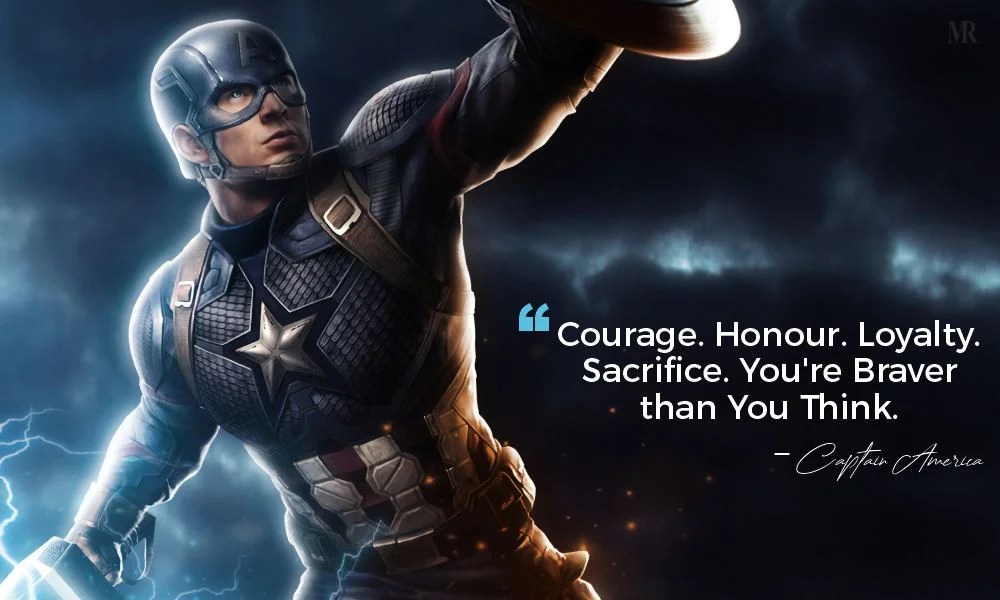
“I don’t want to kill anyone. I don’t like bullies; I don’t care where they’re from,” -Steve Rogers (Captain America)

In 1941, Stan Lee took an image of a stereotypical American, a scrawny kid from Brooklyn, an average-looking red-blooded male who just wanted to serve his country—and gave young boys, a symbol of everything great about America during times of crisis and conflict, everything a soldier and a citizen could be.

if not good, if not empathy, what guides us?

[If there is anything we are truly and woefully lacking in this modern age, it’s a sense of purpose rather than entitlement—I don’t think entitlement does us any good, but I know purpose would]

It’s often easy to forget the lens through which certain stories were crafted, to instead prioritize what we see and have and let ourselves be distracted by the presentation of a hero rather than the purpose and character of them, to swoon and say that’s what a “real man should be” but as much as everyone loves “America’s ass…” personality—we can’t let ourselves forget that Cap wasn’t a hero because of his big muscles. He wasn’t respected because he could pull women or because the bad guys feared him.

No, Captain America wasn’t a hero because he looked like one, or because people said he was one, he was a hero because even when no one was watching, he acted like one.

Captain America wasn’t made to be a monolith. He was made to be a soldier. But he was born to be a kid from Brooklyn (who didn’t like bullies)—and that’s what made him a hero.

this isn’t about a departure from manhood

to some, being a man means not being a woman, but the absence of being one thing is not the act of being another. if being a man is simply not being a woman then what actually is a man? and what actually is a woman? what do either of them have to stand for?

When I was growing up society started having larger discussions about what, “be a man” meant. It was always a statement. Always a negative conversation of ruling out things you weren’t to figure out what you were. And from the outside, at least, it always sounded like something you either then were or you weren’t.

The whole conversation, if you can call it that, left no room for growth, and little room for improvement but it also allowed zero room for the most important question. What is a man?

Of all the things that require someone to tell someone else to be a man, of the things we call people out for being less than “a man” – What is a man?

And, if my interpretation is correct, that sounds like it could have been hard for some people. Confusing even.

Sounds like that yielded a lot more expectation without a real explanation and if that is also true…well, I guess it makes sense how we got here. How we made monsters of men rather than giving them opportunities to be heroes.

living among heroes and men

I grew up with men that I considered heroes. My dad, he wasn’t perfect, but he was my hero. My uncle, he’s has gotten a bit grumblier over the years but he’s a hero to me too, I don’t see that changing. And my brother wouldn’t take the credit but he’s good and he’s noble and I’m proud of who he’s become. (this of course is just to name a few)

None of my heroes look like Chris Evans, but they act like Cap. They lead by example, expect nothing they wouldn’t give, they live with honor, they push forward with love—and I am certain that none of them are fans of bullies.

we all gave up on being heroes, why is that?

There’s a lot of back and forth these days about who we like and who we don’t. About who to blame and who we can’t talk to anymore because of it. But the funny thing to me is that the people we love to hate, the people who don’t think twice about us, who don’t have honor and don’t lead with love are the people, real heroes would feel bad for or maybe even try to help.

The “men” who beg other “men” to think that they are Monoliths rather than being heroes and earning it unrequested. These kinds of “men” believe that the world starts and ends with them. They believe you should sacrifice for them and fight for them, rather than with them and I don’t think that’s what being a man is really about. Not a good one at least, certainly not one I’d be inclined to follow anywhere let alone into battle.

know the difference

America wasn’t always good, but she was greatest when we stood together against oppression, against hatred, against extremists. America was greatest when we decided to use our big stick to fight for the little guy rather than complaining about it coming out of our taxes and watching him get trampled in our wake. America was not always good, but good and great aren’t dependent on single moments but on the promise of better ones tomorrow. And that goal gave us the most potential for greatness that we’ve ever seen—until we lost it.

I hope we find that again one day. I hope we do it right, do it better, do it for everyone next time. But until then, I’m going to encourage men (and women and nonbinary individuals) to decenter those who wish us harm and instead think about the examples that the best among us set.

I encourage you to follow those examples and ignore the rest because right now America doesn’t need any more monsters, or modern “men.” America needs scrawny kids from Brooklyn, she needs heroes—and maybe that’s you.

“Hear me out” – Let’s build a Cabinet

I have never been one to be silly in the face of serious. It is not my style, nor my strong suit—but in recent months, both myself and the world have shifted. So, to that end, I have decided to take some moments here and there to embrace my inner silly goose and fold in some light-hearted fun into more serious topics around me.

The most recent adventure? Crafting the perfect “hear me out” Presidential cabinet using only fictional characters.

And if you know where this is going and don’t want to read through the exposition click here to skip to my picks.

The “Hear Me Out” cake

In recent months, the “hear me out cake” trend on TikTok brought friends together to laugh and share which fictional characters they would date or “have relations with.” Ranging from completely understandable to arguably unhinged, the “hear me out” aspect of the game is meant to explain some picks’ unexpected or odd nature. The game consists of a group of friends who prepare a cake as well as a handful of fictional “hear me out crushes” printed out and placed on skewers so that they may go around and stick those picks into the cake.

In some ways this game is not unlike a fantasy football draft. Or maybe it isn’t at all, I can’t say I really understand fantasy football…But in most ways it is just meant to be a game and an excuse to get together for some light hearted fun.

While some cakes are objectively better than others, while some people seem to be more skilled when it comes to picking characters that no one would expect, it’s important to note that the result of the trend is not to date fictional characters but rather to create laughter and be silly among friends.

Which got me thinking…

As someone known to have far better taste in fictional characters than real-life partners, very few of my “hear me out” partners, needed hearing out. In fact, of the picks I sent to my friends only one made no sense and so, instead of changing my tastes, instead of googling the most pure-hearted but not conventionally unattractive characters, I decided I’d change the game.

—because if I can’t be silly for the sake of silly, maybe, for once, I can be silly for the sake of being a little more seriously unserious…

Introducing, the “hear me out” perfect Presidential cabinet edition

But before I share my picks allow me to share a smidge more context…

In recent weeks there have been multiple announcements of the next administration’s cabinet. Some picks the public agrees with, some the public does not, but it got me thinking. If I had the chance to build a presidential cabinet… using only fictional characters… who would I choose? and would people agree or disagree? And thus the game was born…

The Cabinet is an advisory body made up of the heads of the 15 executive departments. Appointed by the President and confirmed by the Senate, the members of the Cabinet are often the President’s closest confidants. In addition to running major federal agencies, they play an important role in the Presidential line of succession — after the Vice President, Speaker of the House, and Senate President pro tempore, the line of succession continues with the Cabinet offices in the order in which the departments were created. All the members of the Cabinet take the title Secretary, excepting the head of the Justice Department, who is styled Attorney General.

Whitehouse.gov

Below I have crafted what I believe to be a pretty solid Presidential Cabinet… (minus the top most positions that represent the President and his or her line of succession) The cabinet I have chosen to build is one that prioritizes Diversity, Equity, and Inclusion but also aims to be somewhat bipartisan. Representing some but not all of the best aspects of my childhood (and then some). As such, these 15 characters hope to fill 15 positions that would make up the larger part of our Executive branch of government come February and it will be up to you whether or not they get that chance…

All in all this silly activity has allowed me to tackle stress while also providing the added benefit of learning a bit more about what the leadership roles below, play in our country. It is by no means meant to poke fun at the very real decisions that are to be made by our top levels of government nor does it underwrite the time and energy that goes into making those selections. After reading this I encourage you to get together with friends and build your own perfect cabinet and, if you feel so inclined, share your picks in the comments below!

And with that… here we go and happy hiring!

psa: for more info and a refresher on what role each title primarily plays—go to Whitehouse.gov

“Hear me out” Presidential Cabinet picks

DEPARTMENT OF AGRICULTURE: Mother Nature, specifically the “mother nature” portrayed in Disney’s Fantasia 2000.

This Mother Nature is being nominated for her unique ability to recover a world impacted by wildfires and climate change. She also has a more calm and quiet leadership style that will not intimidate any men who work under her. She is also big on personal growth and has a green (everything).

DEPARTMENT OF COMMERCE: Willy Wonka specifically played by Timothee Chalamet in “Wonka” the newest adaptation of the Roald Dahl classic, “Charlie and the Chocolate Factory.”

While I am very much fond of the classic Gene Wilder’s Willy Wonka, and while Gene is just as qualified as Timothee (being the same character at different ages), the committee has determined that this new fictional government will benefit from the fresh and hopeful perspectives of a young Wonka compared to the ones played by Gene or even Johnny Depp. Similarly, Wonka, at all ages, is known to take great care of those whom he employs. He has an aptitude for diversity initiatives and innovation while also adding a unique sweetness to the lives of any and all who cross his path.

DEPARTMENT OF DEFENSE: James “Rhodey” Rhodes aka Iron Patriot of the Marvel Cinematic Universe.

While no one matches the finesse of Robert Downey Jr. aka Tony Stark aka Iron Man (RIP). We in the nominating committee feel that the Department of Defense is best lead by someone who has a proven track record of duty and service and whose convictions and honor guide them throughout their days. For those reasons, no one is more qualified than Colonel James Rhodes aka Iron Patriot.

DEPARTMENT OF EDUCATION: Miss Frizzle from “the Magic School Bus.”

While the next administration “IRL” has declared intentions to dismantle the DOE, we feel that the next generation of young Americans would benefit most from the innovative and abnormal direction that Miss Frizzle takes her class. The committee firmly believes that dismantling the Department of Education is an act that undoubtedly seeks to create a more uninformed and controllable voter base than what exists today and as such, our response is to leverage a candidate that is arguably uncontrollable slightly unhinged and excessively educated.

DEPARTMENT OF ENERGY: Phineas and Ferb.

With only “104 days of summer vacation until school comes around just to end it” Brothers, Phineas and Ferb are determined to get things done in the most efficient way. Phineas and Ferb are able to achieve more than most in far less time and for these reasons and others, American energy would be more than secure in their hands. [We also don’t exactly have the budget for qualified adults considering what Mother Nature cost but were working on reworking that budget with the Treasury and are more than convinced that our nominated pick can find the money needed…]

DEPARTMENT OF HEALTH AND HUMAN SERVICES (HHS): Dr. Oak from the Pokemon franchise.

Disruptive innovation in health often requires a more holistic and global approach. One that explores the impact of both what we put in our bodies as well as what our bodies are surrounded by. For these reasons the members of the nominating committee belive that HHS will be in great hands with Dr. Oak. For additional context…Dr. Oak has dedicated his life to understanding the symbiosis of humans and Pokemon. He has studied nature, monsters, and humans alike and in a world where so many things impact our overall health, he is just the kind of approachable guy to appeal to both sides of the aisle. [Dr. Oak is also a strong supporter of vaccinations because if you thought Rabies was bad… wait till you see what happens if you take a bite from a Bidoof.]

DEPARTMENT OF HOMELAND SECURITY: Elastigirl from the Incredibles

Some men today believe that a woman’s place is in the home, Elastigirl disagrees and so do we on the nominating committee. Elastigirl, like many modern super women has proven more than capable of balancing two lives, one public and one private, and the fact that she is a mother of three only further proves that she has what it takes (the flexibility, skills and proven track record) to tackle any and all threats that come our way.

DEPARTMENT OF HOUSING AND URBAN DEVELOPMENT (HUD): The house from Encanto

The Madrigal House is the most qualified individual to ever be put up for HUD secretary. And before anyone accuses this magical home that was, like our great nation, built by immigrants, of taking “American” jobs, please take a moment to consider if any person place or thing is more qualified than a house that (FOR FREE) custom designs magical spaces and represents the lifeblood, hopes and unique dreams of a multi-generational and loving family. [as an aside, the magic staircase from Harry Potter was also on the shortlist but it was determined that they would be better suited for a supporting role. The Madrigal House was ultimately our first choice and we are immensely glad that they have committed to sign on to our administration.]

DEPARTMENT OF THE INTERIOR (DOI): Kenai from Brother Bear (in bear form)

When it comes to the debate of man vs bear, America has overwhelmingly voted for the bear, and so has Kenai. So we, as the members of the nominating committee, thought, “well, it’s time to listen and give the people what they want.” For too long our country has been legislated by those who have stolen land from indigenous tribes and ignored lessons learned in prioritizing profit over natural beauty and the health of the planet. Kenai, understands better than anyone the importance of focusing on the future for all and the relationship that exists between past and future as well as nature and man. The main role of the DOI secretary is to preserve our country’s protected land and resources as such, no man “or bear” is more uniquely qualified than Kenai for this role.

DEPARTMENT OF JUSTICE: Gal Gidot’s Wonder Woman

The nominating committee feels no real need to elaborate on this pick as it is kind of the most obvious choice…

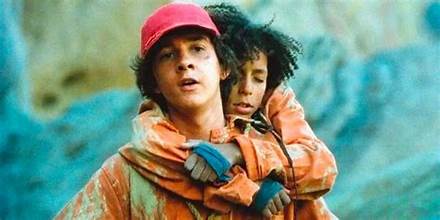
DEPARTMENT OF LABOR: Hector “Zero” Zeroni from the movie “Holes”

After enduring the absolute worst working conditions known to man, at the hands of “the Warden” (played by legendary actress Sigourney Weaver) and eventually being carried to the top of “Gods thumb” by best friend, Stanley Yelnats, breaking a generational curse, inheriting millions and finding his long lost mother. No one is more qualified to handle the Department of Labor than “Zero.” In a world of people that say, “I suffered, you’ll be fine.” Be the kind that says, “I suffered, now you don’t have to.” [Hector also has indicated a desire to spend any free time outside of his role to aid in the arduous task of reforming the United States prison system.]

DEPARTMENT OF STATE: Lilo Pelekai of the 2002 movie Lilo & Stitch

At age 6, Lilo Pelekai found an unlikely friend in a little blue space alien (Stitch aka Experiment 626) whom she met at her local pound [point is worth noting for the “adopt don’t shop” crowd specifically], Lilo then saved Stitch (who was later found to have been actively abused and used for alien testing) from those who wished to re-abduct him. Thus, by age 6, Lilo had more experience with diplomacy and foreign policy than anyone else on the planet. In 2024, Lilo is now 28 years old and will be one of the youngest members of the cabinet but she is also most qualified not only to negotiate foreign relations with our planetary allies and adversaries but also handle any issues that may arise out of the UAP hearings that happened this past week. The hearings say we aren’t alone in the cosmos… Lilo has proof that backs those claims and his name is Stitch.

DEPARTMENT OF TRANSPORTATION: Thomas the Tank Engine

While we had originally planned to offer this position to right-wing favorite and Kansas native Mater aka “Tow Mater” who was wildly known from his work on Cars, the popular movie about Cars released in 2006, recent statements made by the Tow Truck regarding a desire to return to the 50’s on his social media networks have forced us to go in a more reliable direction. [It is important to also note that as a “international boom truck” Mater was born in the 50’s and it is extremely unlikely that his memory of that time is at all accurate to the adult American experience in that era.] That said, while Thomas the Tank Engine isn’t the most popular choice among transportation experts, while he isn’t as flashy as a pick like, “The Boat Mobile” (Spongebob) or “The Bat Mobile” (Batman) we, in the nominating committee, and those in the President’s office feel that Thomas’ “I think I can” attitude is just what our nation needs to get “back on track” (pun intended).

DEPARTMENT OF THE TREASURY: Robin Hood

Keeping in line with a trend for our Transportation secretary, the nomination committee would like to acknowledge that while fan favorite, Mr. Krabs, seemed like the most frugal and bipartisan pick, and while his plans to safeguard the wealth of this nation were unique, we would like to offer up our alternate suggestion of Sir Robin Hood of Locksley. Robin Hood has a bit of a checkered past, he has been known to “steal from the rich and give to the poor” and if accepted he has made assurances to reduce the “stealing” that he may or may not be guilty of, in order to create a responsible plan to redistribute the massive amounts of wealth in the nation and balance some of our nations debts as well.

DEPARTMENT OF VETERANS AFFAIRS: Jorgan Von Strangle

The nominating committee feels no real need to elaborate on this pick as it is kind of the most obvious choice… plus he’s also good with kids…

Closing statements

I, as the sole member of “the nominating committee” would now like to thank anyone who has made it to this point of the blog. I know it was a long one and I can also fully acknowledge that it got more and more wild toward the end but, I hope you enjoyed it anyway.

As was written before, feel free to add your picks to the comment section or take time on your own with friends to play. And if anyone is feeling extra bold, tell me which fictional character you believe would best fill the roles I did not fill but may make sense for the cabinet above ie. President, VP, etc.

Thanks again and happy hiring!

Touch Grass Little Miss Smart A**

I recently saw a video where this life or acting coach helped people free themselves from trying to “be cool” by acting so foolish that they couldn’t fake being cool anymore. It immediately freed them from their ego and allowed them to get back to being themeselves etc. & I need that. So. That said, the following chaos is 100% intentional. Welcome back.

I have been stuck. For a while. Well, not “me” physically. I’m not stuck. To be clear: I am not stuck physically,

(as an aside: quick sand isn’t as much of a problem as scooby doo led me to believe it would be growing up—I also don’t get offered free drugs to say no to so…)

but, I am in my writing. To reitterate: I am not stuck but my writing is. My writting is dramatically stuck in… Limbo? In editing mode. In drafts. In random word documents and journal entries and notes app notes. Point is…my writing has been stuck. All of it. Everything. For a while.

And even writing this is starting to feel like nails on the chalkboard because the other versions I created were so much more neat and tidy—and incomplete—but thats not the point—and even if it was, they, those neat and tidy, and unfinished versions, wouldn’t help me break the habit I am trying to break so here we are. Here we are, back at it again… *sighs* Hi. What’s up. It’s been a minute. Hi.

Anyway…A couple years back I fell into the terrible habit of writing to “sound smart”—which mostly just makes me feel dumb because no matter how pretty it is or how nicely it rolls off my tongue or tickles my brain, it isn’t me.

I mean it is… but it isn’t.

It is… but it takes forever and it’s too polished. It’s too intentioned and it’s not as fun and at this point it’s honestly kind of annoying. So here we are.

There was a time in my life where I could sit down and write pages of content. Poems and plays and novels in november and I loved it. It was freeing and it was fun. It didn’t feel as hard, it didn’t feel like work…It was just, fun. But I already said that so…

Let me try again…

I used to be a good writer. Self proclaimed, most days, but I guess other people liked it too? Which isn’t the point… the point is—I used to be a good writer, not because people liked it, but because I had something to say. Something to get out. I had stories to tell.

And it didn’t always make sense, it was rarely written for the masses but it meant something to me and it saved me from myself more than once. Then somewhere along the way I got stuck. I got tripped up by wanting to sound smart or not say anything controvercial or… be “good enough.” But doing all that killed my voice and ruined my writing.

So here we are! Rambling… with the intention to publish said ramblings and get out of my own way and get out of this funk. Hopefully.

Fact of the matter is this—Sounding smart or at least wanting to sound smart hasn’t gotten me anywhere. It has only held me back in my writing.

So here I am, trying something new, rolling with the stream of concious, not trying to sound smart, or edit too much and at the end I will hit send and then I’ll do this again and again and again. Or try to. Until I fix myself.

Until I can write as me. Until I can stop trying to just “sound smart” and just be smart. Or at the very least be me. Until I can tell my ego to “suck it,” respectfully, of course.

Wish me luck!

The one where they all become ghost stories

“They died…” “Okay… and then what? That happened to them, where did YOUR story go next?”

At a certain age, I can’t say exactly which one, I was taught that asking “why?” or asking for an explanation, clarification, or context was typically more of an inconvenience than most individuals would prefer to deal with. So, I began to ask why less and less.

I don’t have an exact metric, nor can I measure how my own experiences might equate on a global scale, but, in my own experience, I’ve noticed that within 3 to 4 weeks (maximum) of losing a loved one or experiencing tragedy, the world gets noticeably quiet again.

When someone gets sick or dies, we tend to love bomb—we send letters, bake casseroles, like Instagram posts, and share platitudes and whatnot—but after we bury our dead, though feelings linger in varying degrees, those grieving know all too well that ovens cool, letters cease, conversations slow, and more or less we (or rather the world) move(s) on.

“Sex is not America’s greatest secret, death is.” – Alice Sebold

If you haven’t lost someone, for reference, I’ll use a larger scale example – I don’t remember when they stopped running articles for George Floyd, or when groups of us stopped amassing in protest of police brutality, I can’t remember how many weeks it took for the conversation about Ukraine to shift from screams to support to voices pleading to remove ourselves from the financial burden. And I don’t know how long protests for Palestine will last but I can only assume that they will stop somewhat shortly after the bombs do. They will not demand that homes be rebuilt, they will not wait to hold governments accountable. They will not have patience to outlast the decades it will take to rebuild what has been lost in months, and while I wish I had less confidence in saying that—well maybe part of me is just hoping someone will read this and prove me wrong…

In my experience, the longevity of one’s grief by experience or association vastly depends on the impact (or interruption) and proximity to that grief rather than on the topic of grief itself. By this I mean to suggest that those who know grief knows the companionship it lends and those who don’t assume it ends—it doesn’t.

I don’t know how many days or months or years it took for us, as a country, to decide to only talk about Martin Luther King Jr. during February or honor what brought about the Stonewall riots in June—but I know I’d all but forgotten about the wildfires in Hawaii until I saw the commercial during the Super Bowl. And shamefully like Hawaii I’d all but assumed the problems facing parts of Florida and Louisiana (Katrina) years after their devastating hurricanes were resolved until people who used to live there told me otherwise.

Which mostly goes to say, that if I hadn’t asked, I wouldn’t know. But a part of me looks at the scars I carry and thinks I should have. Part of me thinks that it shouldn’t take more disasters or crimes or loss of life to group things in such a way that they earn themselves a month of discussion, but often times that seems to be the case. That only after years of loss and pressure do we finally dedicate specific time to a cause that could be discussed far more often making it more preventable.

Humans have shown to be somewhat picky about what does and doesn’t hurt them—but what we show, in my experience, rarely reflects how we actually feel. The scars others see tell a fraction of the story that we live with, which means it’s up to us to share the rest, should we chose to do so.

And I think, as humans, we find bliss in that, in the plausible deniability and the not knowing…and while it’s not wrong to want to unburden ourselves of things we cannot control, how sad is it that some must sacrifice alone for others to thrive together.

Have you ever taken a minute to realize that maybe, just maybe, self-harm is more jarring than the mental health diagnoses that lead to it because we can only justify hurt when people are physically bleeding?

I suppose we could blame social media or news cycles. We could blame communities for growing beyond us in a way that we are less able to pay attention to the here and now of what’s in front of us. We could blame over correction and connection or information overload or curiosity but no matter what or who is to blame all of it merely seeks to avoid the issue.

At the end of the day, we all become ghosts. (Some of us even manage to do it before we die). All our stories become ghost stories. Tales passed on from generation to generation of lives well lived, of heroes and villains, and dreams pursued or deferred. And while most of our stories will be happy and impactful and triumphant, it’s also important to think about and remember the parts that weren’t. I guess this is all to say, in a world surrounded by ghost stories maybe there are still lessons to be learned by sharing them rather than letting them fade away. Maybe it’s worth looking at what keeps certain stories alive longer than others and what the impact to those ghosts and those who live on can be should we choose to keep their stories alive.

It’s up to us to remember the lessons others have led and it’s up to us not to repeat the mistakes of the past. We can only do that by sharing those stories and being honest with what future we are walking toward. So? how about it? What story will you share first?

And the WOW award goes to… Coach Paul Nemeth

It wasn’t an obvious transition by any means. It wasn’t clear, like the sound of a starting gun; or well rehearsed, like the a passing of a baton. It wasn’t a single, earth shatteringly clear moment—like a beam of sunlight placed perfectly on his long since balded head that lead Coach Paul to be one of the most important and influential figures in my life after my dad died. But knowing him and knowing my father, I do think they would have been good friends. The way I see it, men like them don’t come around often and for that and a million other reasons I am grateful to have known and learned from them both during my lifetime.

After many moments of silent reflection…

I’ve always thought that they would have been good friends. My father and my high-school cross country coach. In fact, I know they would have been. And oddly enough, I can smile about it now (at least in this moment) in a way I couldn’t back then. The thought of my father and the somewhat random mustached man who showed up for me not long after my father couldn’t anymore and chose to stick around.

So, despite how hard these days following the news of my now second heroes passing have been, I can’t help but find comfort in the fact that they’d have been great friends, and that while I don’t know how it all works after we walk off the track for the last time, I’m hoping, now they can be.

A lifetime ago in 2010

Now if I’ve said it once, I’ve said it a thousand times. I definitely didn’t join the cross country team for the running. Back then I was of the mind that running in long distance and repetitive forms, much like writing in long and repetitive forms was better suited as a means of punishment than one of pass time or exercise. Obviously for me and luckily for everyone involved, I slowly but surely changed my mind on both trains of thought—but, looking back, for all the silly reasons I joined that team, for all the boys I didn’t get, the races/meets I didn’t win, and all the abs I no longer have, Paul was one of (if not the) the biggest reasons that I stayed.

It’s a rare and special thing…

It’s a rare and special thing to have someone shape and save your life in such a way that makes you walk away feeling like a hero to yourself as well.

To know that, in a world where some will help you and make you feel like a burden for it, others will prop you up until you have the strength to stand on your own again then encourage you to take a victory lap.

As an aside: it’s even more rare for someone to take it three steps further — not only inspiring and empowering me to take another lap but to believe in myself and take bigger chances after graduating High School. The largest of which lead me to walk-on to my schools D2 Track and Field team (a choice, by the way, that would change no less than the entire trajectory of my life simply because I couldn’t give him a good reason as to why I wasn’t throwing anymore). Paul did all of that and more for me without hesitation.

And the WOW award goes to…

It’s a rare and special thing to have someone to prop you up in the way he did and while the literal meaning of those words are very much true (I’d argue that at least 7 of every 10 of my teammates have been carried off a finish line by Coach Paul during our 4 years with him) I’d also reckon that all of us were consistently and proudly propped up by the way he carried himself and by the way he lead his life and our teams.

And I genuinely have to believe that a spirit like that, like his, doesn’t get to die with him because he made darn sure it got passed on and on through all of us, all of his athletes, and how we continue to carry ourselves today.

So… keeping all that in mind – I think it’s only fair to say that this weeks WOW award goes to Coach Paul because he was a great leader, an incredible friend (family to many of those who knew him) and unwavering force for good on our teams and in our lives.

It goes without saying that this one is going to hurt for a bit but more than anything I write this to celebrate him because a legacy like that, a legacy like his – is a very rare and incredibly special thing and I could not be more grateful that I get to be a part of it.

Adulting, America, and the modern American Hunger Games

In the last decade I have witnessed the rise of an American President who can be accurately compared to Hitler, seen my country turn toward a reality that is not unlike “a handmaids tale,” and watched as womenhood and manhood are reduced to their biological makeup.

In the last decade, I have seen the near fall of Democracy, the start of the rise of fascism in the U.S., and seen schools turned into war zones where children have essentially become “acceptable losses” to maintain freedoms they are often too young to comprehend.

It’s easy to condemn fictional characters – it’s harder to realize that you’re living their story.

I don’t believe the narrative that humanity is inherently violent. Though, much like saying “boys will be boys,” I think believing violence is biological can be used as a means to excuse the presence of it. I don’t believe the narrative that people are born good or evil, though it is probably easier to separate ourselves from “evil” people when we claim they were born that way. I understand and half believe the narrative that in times long before organized society that this world existed in a state of nature vs man and… I believe that in a world and a reality where we rarely have control of anything that happens around us we can have absolute control of the choices we make and the way we react to situations.

And I believe that none of us are innocent in believing that we have never made the wrong ones.

Welcome to adolescence, your training starts now

Growing up I thought weapons looked a certain way. I’d hear the word and images of sharp objects and combustible materials would immediately come to mind. Then I grew up and I found something else entirely to be true. I grew up and I realized that the things we, as humans, use to harm other humans are not limited to the things we can build, but also to the things we can imagine – because often, the things we can say are much more harmful than anything we can do.

Kids today are at more risk of violence on multiple fronts than I was when I was their age. This doesn’t make them victims or mean we have to hide them away in towers or make laws to limit their access to things – but it does mean we have to play a more active role in discouraging such things.

Keeping someone away from a dark alley and what danger may rest in it doesn’t remove the threat – it just transfers the risk from you to someone else. Keeping people offline or keeping them away from certain ideals may “protect” them (or your beliefs) in the short term but then when they inevitably face that danger (or those “alternative” beliefs) when they are deemed “old enough” – they might not know how to handle it.

Welcome to adulthood – now choose your weapon

As an adult, when I think of weapons, I still think of knives, of guns, of explosives, and of hands with bad intentions. I think of weapons and my mind still fills with images of everything from simple objects to complex tools. But I also think of other ways to be wounded. More ways than I ever thought possible.

For example, I think of how much it hurts when parts of us that get buried with a loved one. I think of how scary it can be when we allow parts of us that exist outside of us in friendships/relationships that could end. As an adult I think of weapons and I think of the infinite ways one person can hurt another – and then I decide I never want to do or use any of those things against someone else.

Every day I actively decide to do my best to support the people I love and to have compassion for the ones I don’t know or the ones who’s choices I may not understand. And right now, for me, that’s what life is about. It’s about making choices to be decent and spread decency because in a world where some chose to give in to their darkest impulses – many more chose light.

Darkness cannot drive out darkness; only light can do that. Hate cannot drive out hate; only love can do that.

Martin Luther King, Jr.

In a world full of darkness I chose to have my weapon be light. It sounds silly, and in this country, it would probably lead many people to laugh – but it’s my choice and I know it will continue to serve me well.

Look, in my very blunt opinion I think most things about growing up suck. I think we live in a world where we are threatened if we are different and we are threatened if we support those who are. I think we are undervalued and underpaid and most of us are tired and frustrated and all of that really does suck.

AND

I believe that in this country many of us want good and I know that none of us chose the “war” we currently exist in – but it’s here and every day we have the choice of how we want to fight it. And lastly, I believe that sometimes, the best way to fight is not at all. By all means, don’t be passive, and for the love of all that’s good don’t stay quiet – but chose light and encourage those around you to do the same.

On being okay with not knowing what the future holds

I have never been good at thinking beyond the concept of what I thought my future could look like. This is funny to me, considering the fact that I have created worlds and built lives for dozens of characters through my short-form and long-form writing, yet I struggle to dream or envision what I want for myself.

Maybe you relate to this. Not the world-building but the struggle to imagine what the future can or will look like. Maybe you, like me, dreamed of your future in blurry blobs and bubbles. Maybe you had a clearer picture, knowing the kind of things you wanted, but not all the minute details. Maybe you walked through life feeling like you were looking at pictures in a photo album that was always out of focus and constantly changing.

Maybe you, like me, have thought of things as milestones instead of steps.

  • Go to school
  • Get the job
  • Find a Partner
  • Get married and get a house
  • Have some kids
  • etc. etc.

and so on and so on. Lacking the ability to fully manifest and fulfil those dreams. But, then again, maybe you haven’t – but I suppose that’s why this is my blog and why I can only speak to my own experiences.

Everything feels so much bigger when you are small – but sometimes I wonder if I’ve grown out of that yet

Growing up, and even now, I struggle to know how I want to get to the things listed above. And sometimes I struggle with wondering if those are still the things I want – or if they are just the things I thought I had to do to have a ‘good‘ life. A life like my parents or like my peers.

I used to think it was the depression, or the grief that was holding me back from being able to dream about the future but now I wonder if this is just a normal part of growing up. I wonder if I struggle, not because I needed someone to tell me the steps or because I didn’t have access to figure it out, but because, on some level, I assumed it would all fall into place by now.

And I never felt like I was owed any of it but I did live thinking that if I follow the rules, do the ‘right’ stuff, be kind to others and live truthfully and intentionally that life would all just naturally fall into place.

And to be clear – I am by no means saying life hasn’t happened the way it should or that I am dissatisfied with where I am at. I am merely saying that I am still trying to find more focused visions of what my future can and will look like and how I am supposed to get there.

“It’s okay if your future still isn’t clear, no one said it had to be” – me to me

I have never been good at thinking beyond the concept of what I thought my future could look like. I never really imagined my wedding or decorated my future homes. And sure never is a strong word because sure I had Pinterest boards, and I imagined facades of homes with long driveways and played MASH, but for me, it was always easier to build out someone else’s future in a story than it was to imagine my own.

Thinking back now, maybe this was because the idea of growing up was daunting, (I mean isn’t it for everyone?) maybe it was because I didn’t think I’d make it this far, or maybe it was because my brain works in all or nothings but every day now I live in the future I imagined then and while it is nothing like what I imagined it to be yet, I realize now that it was never really supposed to be.

So as I look to my future, that I suppose I am getting more comfortable planning, I will tell myself this: It’s not okay to give up on yourself, it’s not okay to think you’ve fallen short and it’s certainly not okay to say that a previous version of you wouldn’t be amazed of who you are. But most importantly, it’s not okay to think that life is just a check-list — because some of the best things in life don’t come when we follow a plan.

So it’s okay to ‘arrive’ late, it’s okay to not arrive at all, it’s okay to want certain things now, and it’s okay to change what you want (constantly and without explanation). It’s okay to acknowledge that the future is blurry (and to always have to use spell check when you type out acknowledge). It’s okay to be where you are at because who you are is someone very few people saw coming.

So here’s to being okay with not always knowing what the future holds and to hoping that it allows me more time to breathe life into the things I love.

Feeling vs. Being: the meaning of ‘unqualified’

Last week, while walking through Target (as one does), a young mom complimented my hoodie; any other day that wouldn’t have inspired a blog post, but the reason this time did – that hoodie read “Awkward N’ Adulting.”

Look, I’ve been doing this thing for a while; we might even be coming up close to 5 years now, but of all the years I have been doing this, I think some of my best work came in the early days. The days when I cared less about sounding smart, or profound, or in the loop – and more about sounding like what I was and frankly what I still am – someone who is just trying to figure herself and this world out.

When I started this blog my goal was to focus on topics that would help people like me feel less alone in their “Adulting” experiences. I wanted to tackle the topics that made growing up feel awkward and uncomfortable and even disingenuous at times. And for a while that is exactly what my team and I did. Anyway, years passed things changed, it’s just me now blah blah blah, which brings us to now. [Insert explanation on how the topics I’ve been trying to tackle lately (while relevant) are too big swingy for the post turn around times I’d like to maintain.] Anyway, anyway, long story short – I want to get back to my roots. I want to stop trying to dissect big issues and focus on what’s really important – the little stuff. So let’s talk about some little stuff – let’s talk about the pressure to be qualified and the stress that comes with feeling unqualified.

The starting line

Sometimes it feels like the pressure I feel so heavily now, started when it was time for me to enter (and stay entered in) the workforce, but that’s a lie.

Truth is (at least the way I see it), my ability to build my credentials started long before I was made to sit down and jot them down on a piece of paper or a LinkedIn account. And while I could take that sentiment and run with it as a statement on privilege and the expectations people are born into I’d rather keep it a bit lighter by starting in school.

The early times we have to qualify

Even in our earliest years of schooling we are required to meet some sort of criteria to qualify to attend. Parents of kindergarteners and pre-kers are expected to equip their kids with certain skills or lessons to grant their children the access to learn more. Then slowly but surely, the responsibility shifts to us and with each new year we, as students must carry on that torch by passing a series of tests (written and otherwise) to continue to progress. It isn’t until we reach a certain age that we realize how much we had to do or how much we had to overcome to merely exist (without disproportionate resistance) in certain sectors of society. [and keep in mind some people have to learn this much earlier than others based on who they are or what “limitations” they have when compared to the more “accepted standard” of society]

Then, seemingly before we know it, those of us who are lucky enough to keep moving and progressing without too much resistance, age into more opportunities. Opportunities like being able to work and drive and vote and fight; and despite the fact that we either feel or are completely unqualified to take on these roles, we do. This then continues the cycle by allowing us the freedom to learn more things and do more things and it gives us the confidence to chase more difficult opportunities and develop relationships etc. etc. and so on.

Until we apply for something like college, or a non entry level job…

Maybe it’s more about the shift in resistance?

I know I have been using a handful of generalizations thus far, but to be clear, I obviously can’t speak for everyone. So I’ll shift to my own experience.

In my own experience, stress becomes more common when I have something to lose or if something is out of my control. In other words, life becomes a bit trickier when I have planned my next move, but it feels like someone else gets to decide if that step forward is one I am allowed to take. This happened when being accepted to college, to an athletic team, getting a job, and often time it also applied to relationships as well.

Now, to be fair, that stress doesn’t actually come from me being unqualified to get the job or date the person or place in the competition. That kind of stress came and continues to come from not being used to the resistance that comes with being able to progress to the next level.

Maybe it’s about believing I am not enough?

When I first started applying for jobs I was so terrified. I was scared that I wasn’t good enough or worthy of the opportunity. Because of this I often took the first offer I was given. In most cases the employer wasn’t intentionally taking advantage of the situation but I was definitely underwriting my own worth and what values I brought to the situation. In half of those situations my inability to realize my own self worth lead me to making the wrong decision.

Luckily my ability to value myself in the workplace has gotten easier as I have gained confidence and experience. And I suppose this is natural progression I was meant to take on in life, but that doesn’t mean I don’t wish it had come with much less pressure to feel qualified or to live up to extreme expectations. So I guess looking back I wish I had told myself I was enough more, but then again I suppose that’s the power of retrospect.

Maybe it’s about being compatible?

In my own experience, not getting a job or losing a job or getting ghosted has felt a lot like not being enough, but getting stuck in that way of thinking neglects another variable, compatibility.

In my early years, and I think this might be a similar experience for a few of us, but, in my early years there wasn’t much of an issue with compatibility. I mean school wasn’t easy with a learning disability, but it wasn’t impossible given the support systems I was lucky enough to have. Not to mention when it comes to schooling, especially certain schools, there is a lot lower bar when it comes to being accepted. [Not from a social standpoint obviously but from the perspective that access to some level of schooling is somewhat accessible to a wide variety of individuals.]

And thinking about it, maybe this was intentional. For me and for a handful of others who experienced life in a similar way. Maybe, given the proper tools, some of us are allowed to progress through a path of minimal or medium resistance in our early years allowing us to gather more confidence in tackling bigger challenges. And this is not to say that adjusting to those new challenges was any easier, but at least I was given the confidence to lunge toward those things. But then again maybe having less resistance early on, while a great boost to confidence, also made it more difficult to adjust to the larger expectations and requirements that come with an increased demand of compatibility and an increased level of resistance.

So maybe I am lucky to look back at a time that felt challenging in the moment and now feel able to take chances, even if they are not given or even if I am not compatable with them. But maybe I am also allowed to acknowledge that being lucky to have that perspective doesn’t negate the fact that I also feel stressed or inferior or “unqualified.” Maybe I am able to acknowledge how many advantages I have while also feeling the things and all the discomfort that comes with the current situation.

Maybe feeling and being don’t have to be mutually exclusive?

In my life I have grown and learned and felt. In my life I have had moments where my confidence in my abilities was overwritten by one person’s opinion or a mere lack of compatibility in a certain situation but I have also had moments where I felt like the credit I was receiving was more than I deserved. In other words, I have been given opportunities and I have missed out on them, and I suppose that is the way life goes. But of all the ways life is supposed to go, one thing I have struggled with more than most others is (particularly in opportunity based situations) separating my feelings from some of the truth’s of a given situation. And I want to do better at that.

So, I guess what I am trying to say is that there are a lot of things in this society that have and continue to require us to qualify. And I suppose the point I am trying to make is that while I am not always as qualified as I would like to think, I am also not nearly as unqualified as I often feel myself to be. And maybe you or someone you know can relate to that too.

But, at the end of the day, I guess this is all to say that life is complicated. That I and we may have times where we feel like imposters or like we are not good enough. Hell, we may have times when people even tell us as much. But I guess something I am trying to learn as I grow is that just because I don’t feel like I am something right now, or just because I believe I am not what I have been time tested and trained to be, doesn’t mean it’s true. And maybe the same can be said for you.

The meaning of ‘unqualified’

Maybe none of us feel qualified for anything and everything we do, maybe the ones who think they are, actually aren’t. Maybe none of us actually have a clue – but hey, maybe that’s the point. Maybe that’s just part of being awkward and Adulting.
3 reasons to not compare yourself to others, or to an older version of yourself

With the exclusion of what I like to call “womb-mates” (twins, triplets, etc.), who may or may not bear an uncanny resemblance to you, there is no one on, above, or under this planet that is exactly like you in any way. The experiences you have, the privileges or struggles you are born into, the way your hair falls – every aspect is unique. So why are we constantly comparing ourselves to others? And keep in mind that “others” could also refer to yourself because I don’t know about you, but I am just as guilty of comparing me to past me as I am to someone who certainly is not me.

3 reasons to not…

(1) The version of you that fit in “those jeans” wouldn’t fit into the life you have built for yourself: I saw this picture the other day that said,

“those extra 5-10 pounds, that place where your body naturally wants to be – that’s your life. That’s your late night pizza with your man, that Sunday morning bottomless brunch, your favorite cupcake in the whole entire world because you want to treat yourself. Those 5-10 pounds are your favorite memories, your unforgettable trips, your celebrations of life. Those extra 5-10 pounds are your spontaneity, your freedom, your love.”

anyway, it really resonated with me, not just because I love brunch but because some of the “extra” pounds I wear are due to meals I love or medications I need; and for a while I let it get to me but it’s far more worth it to be healthy than it is to fit any kind of aesthetic.

(2) Wishing you could “be someone else” (in the moment they are in) solely based on the parts of them that you can see, minimizes their experiences and gives you an excuse to fall short of the best version of yourself. Almost every single time I look at someone else and say, “I want that” – it comes with a reason why I can’t. And the reason why I can’t is almost never rationalized as an “I can’t right now” but an “I’m not them so I can’t ever.” So for example I’ll find myself scrolling through Instagram and falling on an influencers page and thinking “I want to travel the world, but I can’t because I don’t have the time or the money.” And the truth of that is that it wouldn’t be impossible for me to do it but I am choosing not to because I don’t want to save the money or take the risk of leaving my job blah blah blah. My thinking this way completely minimizes whatever effort that person put in to living that life but worse than that it gives me an out on why I don’t have to work for it because I just want it right now.

(3) The rules have changed: The world we have inherited from the generation before us is not the same as the world they grew up in and neither is the economy. At this point, the playbook they keep telling us to follow is for an entirely different game and the more we try to follow it, the more we will disappoint ourselves for not getting the results we were conditioned to want. Maybe what we need is less coaching and more giving ourselves some grace.

The takeaway

Throughout my journey into and through adulthood, I have had to do a lot of unlearning. Whether it be toxic ideologies from society or my own expectations of where I should or should have been by x age – things in my life and especially in my 20’s just lead me to this path of constantly comparing myself to others rather than noting and appreciating where I am at.

In other words, when it comes to comparing myself to others or to previous versions of myself I am as guilty as the next person; and while I definitely doubt I will stop doing it after writing this, I did want to take some time today to mark down some reminders of why continuing to do this isn’t actually benefiting me, and why it probably isn’t helping you either.

So after reading this maybe you feel like you can relate, or maybe you feel like you can’t but either way I hope you can give yourself some grace.

Writing for spin over substance: how powerful people manipulate the art of interpretation

One of my favorite things about having studied art and literature is how often and how much we were encouraged to develop our own interpretations of what is laid out in front of us.

I mean, think about it, in a world where so many ideas are meant to be seen as concrete (or black and white), where history (no matter how skewed in favor of the victor) is not to be questioned (or “changed”), where math is often to be solved in a particular way, and where science is to be structured and methodical for the sake of safety or accuracy – art and language are the first areas where we as people and as students are not asked to recite information but rather to reflect on it.

In school, time spent reflecting was often my favorite time spent. Poetry allowed someone like me, someone with an overactive mind, to relish in the multiple trains of thought that could be pulled from a single line. And in college, I found comfort in surrounding myself with people who enjoyed doing the same.

As an adult, however, I’m not sure I still hold the same fondness for interpretation as I once did. Part of this is because, outside of novels, poetry, and literature the loudest voices are often the ones who speak for attention rather than speaking with intention. Part of this is because the same people who wrote off writing as just a “required credit” class are now in charge of sharing vast amounts of information and can’t seem to do so in a clear, concise, or even logical way. But mostly I think it’s just because a lot of voices lack real creativity – which is just to say that we get the same rehearsed rhetoric (the same full stop labels) over and over and over again without a consideration of whether it actually applies to the topic being discussed.

That said, this week I read a take (one that was thankfully not political) that made me roll my eyes. It read (paraphrased), “employees don’t leave bad companies – they leave bad managers.” And truthfully (and probably obviously since it inspired a blog) the quote boiled my blood a bit – and let me tell you why…

Let’s stop pretending managers are the problem

According to some light research – the original phrase (that inspired the one I found as well as dozens of other articles) was, “Employees don’t leave companies – they leave managers.” [Marcus Buckingham, First, Break All the Rules: What the World’s Greatest Managers Do Differently] and it first appeared in Marcus Buckingham’s: First, Break All the Rules: What the World’s Greatest Managers Do Differently, in 1998. And while I have no doubt that one company or another didn’t try to use that excuse before Mr. Buckingham put it in a book, his study of more than 80,000 managers gives it (his book) a fair amount of credibility. However, the fact that this idea is still being used today, more than 20 years later, has proven to me that bad managers aren’t the problem – the companies are.

Accountability would never

Have you ever heard that saying… the one about the head of the snake? “Cut the head off the snake and the body dies.” Usually it’s used to explain war scenarios – suggesting that taking out the head of an army will stop the rest. A similar idea exists in the advice crime show cops give to criminals about to go to prison – they say to find the biggest guy in the yard and take him down because no one will mess with you after that. Then of course there’s the less violent ideas. The ones about top down leadership and how older siblings should set a good example for the younger ones. And at this point I know what you might be thinking, all of these examples seek to prove the importance of managerial leadership, right? And sure, in a way they do but let me ask you something – what do a general, a criminal, a manager (boss), and an older sibling have in common?

Got it?

Accountability from the bottom up

Now, don’t get me wrong, a bad manager can certainly make or break a job. Even sources outside of business support the idea that good leadership makes a good team and success and so on and so forth. Great teams win super bowls, Ted Lasso (obviously the other kind of football), yada yada. But what all these people have in common is not that they have a team or that they have people working or existing under them — the real thing they have in common is that none of them have a final say in decision making. The real commonality that they all share is that NONE OF THEM HAVE REAL POWER – but they all are held accountable for the ones who do.

The breakdown:
  • Generals might make calls and lend advice but they still have to report and follow the orders of the commander and chief (or whoever has total control of military forces).
  • Prison inmates can assert enough dominance to have power over their peers but they will still be at the mercy of whoever owns or controls the prison system (not just the prison but the system).
  • Managers are also just foot soldiers – whether they report to another manager or the c-suite, no matter what they do or how good they are because they still have to follow the guidance, orders, or examples of the people above them.
  • And eldest siblings? Well until they are old enough to support themselves or become a cog in the bigger machine they report to their parents or guardians. (duh)

History is written by it’s victors – but wars are won by its soldiers

Remember earlier when I was rattling off subjects that are more concrete than art or literature? I talked about how history is not to be questioned even if it’s bias favors the victor. Well, this same sentiment also applies to business and business writing. Business narratives are vastly determined (and recycled) by looking at successful companies and emulating their processes to (hopefully) replicate success in other settings.

In grad school, a large part of my study was looking at case studies that compared various marketing strategies. Many of which talked about how brand recognition (or company recognition) which is arguably one of the most important aspects of the marketing process, drove sales as much as product does. (Nike for example – the quality might not be the best all the time but people recognize the swish and possibly respect you more for it.)

See, unlike art and literature business isn’t to be interpreted on a creative level because unlike art and literature business is communicated more with numbers and data than it is with words or emotions. From a business perspective this way of communicating is great because it gives companies proof that certain processes work and others do not. After all, data drives strategy and strategy drives business, right?

Well…yes, but also… not exactly.

A company is nothing without its workforce

I think the reason it’s easy to make a statement like “Employees don’t leave companies – they leave managers.” Is because of how easy it is to take the human aspect out of business.

I mean, if you think about it, bad managers aren’t all that dissimilar to bad ex’s. When someone is hired or when we bring someone into our lives it isn’t just because they are qualified, it’s because they have something that will add value to us and to the team. And because managers often have to start at a lower level and learn the business to take a more substantial leadership role in it – it’s fair to assume that that “bad manager” is a product of whatever system (in this case – the company) that created them.

In other words it’s just as easy to say, “Employees don’t leave companies – they leave managers.” As it is to say, “It’s not personal, it’s just business;” because in the business world words matter less than numbers do. So it’s easy to look at a lull in profits,target a low performing team, and blame one person “in charge” rather than admit that, “Hey this keeps happening. It used to feel random but this person has been here for a while so maybe it’s the values we are promoting in our company. Maybe it’s the conditions that the company creates for its workforce. Maybe we should consider that something we did went wrong to make them lead this way.”

Trading in spin for substance

At the end of the day, there is a place for interpretation in all aspects of life, even business and history – but I think we need to be more careful with who we allow to write the story.

The United States isn’t the only country that allows the few to try and manipulate and dictate the identities of the many. The United States isn’t the only country that often favors spin over substance; but seeing that the US is the country I live in, it’s arguably the only one I am qualified to speak of.

Anyway, if it wasn’t already made clear, I personally don’t subscribe to the idea that employees leave managers rather than companies. Maybe this is because I have had very few bad managers, but more so I think it is because (speaking from my perspective as someone in my generation) there has been a paradigm shift in this country when it comes to accountability. For me it is less important who I work under and more who or what I work for.

So sure, a good manager is important to me, but what I hold most important is that we stop blaming one or two bad people for a system we are all existing under and feeding in to.