The in-human condition

(a 15-minute writing practice)

The in-human condition

Tired of this
Tired of screaming for help
For truth
For clarity
Tired of screaming into the void

I’m so conditioned,
so used to being screamed at,
that—
when you speak calmly,
it feels like I’m being spoken down to.

So in response, I—scream at you.
I at you
You—who is trying to help
You—who is trying to survive too
You—who is trying…
to hear truth
and see clarity.

just like me.

I at you
—I’M SORRY.

But don’t tell me that’s okay,
Don’t tell me that it’s normal—
that you’re just being cordial,
don’t validate my torment with soft sentences or gentle parenting.
Because I don’t need that.

Me to you—
I DONT NEED THAT.

I NEED…

I need the noise.
I need the screaming

I need the void
I need… normal?…but what is?…

Loud is normal
Violence is normal
Screaming is normal
Torment, torture, treachery is…
Normal

The world I’m living in has become normal—
But it shouldn’t be
IT SHOULDNT BE
And so changing that—
has to start with me.

I to me
Deciding how long it takes until
Me flip to the W — WE —
WE DECIDE
To stop tolerating normal
And stop enabling and start fighting
This in-human condition.

On monsters, men, and Captain America

we havent lost our way, we’ve lost our why

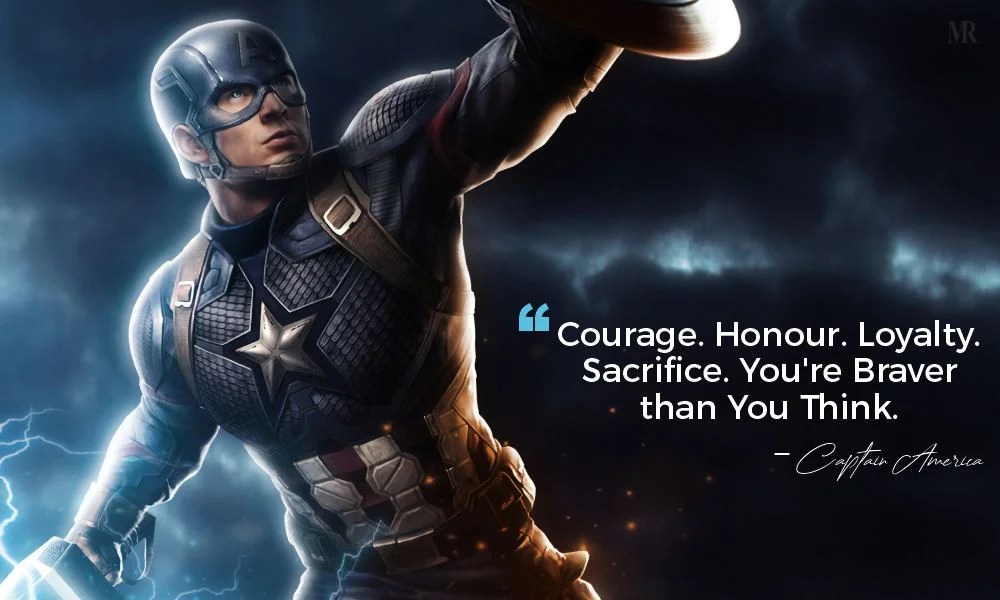
“I don’t want to kill anyone. I don’t like bullies; I don’t care where they’re from,” -Steve Rogers (Captain America)

In 1941, Stan Lee took an image of a stereotypical American, a scrawny kid from Brooklyn, an average-looking red-blooded male who just wanted to serve his country—and gave young boys, a symbol of everything great about America during times of crisis and conflict, everything a soldier and a citizen could be.

if not good, if not empathy, what guides us?

[If there is anything we are truly and woefully lacking in this modern age, it’s a sense of purpose rather than entitlement—I don’t think entitlement does us any good, but I know purpose would]

It’s often easy to forget the lens through which certain stories were crafted, to instead prioritize what we see and have and let ourselves be distracted by the presentation of a hero rather than the purpose and character of them, to swoon and say that’s what a “real man should be” but as much as everyone loves “America’s ass…” personality—we can’t let ourselves forget that Cap wasn’t a hero because of his big muscles. He wasn’t respected because he could pull women or because the bad guys feared him.

No, Captain America wasn’t a hero because he looked like one, or because people said he was one, he was a hero because even when no one was watching, he acted like one.

Captain America wasn’t made to be a monolith. He was made to be a soldier. But he was born to be a kid from Brooklyn (who didn’t like bullies)—and that’s what made him a hero.

this isn’t about a departure from manhood

to some, being a man means not being a woman, but the absence of being one thing is not the act of being another. if being a man is simply not being a woman then what actually is a man? and what actually is a woman? what do either of them have to stand for?

When I was growing up society started having larger discussions about what, “be a man” meant. It was always a statement. Always a negative conversation of ruling out things you weren’t to figure out what you were. And from the outside, at least, it always sounded like something you either then were or you weren’t.

The whole conversation, if you can call it that, left no room for growth, and little room for improvement but it also allowed zero room for the most important question. What is a man?

Of all the things that require someone to tell someone else to be a man, of the things we call people out for being less than “a man” – What is a man?

And, if my interpretation is correct, that sounds like it could have been hard for some people. Confusing even.

Sounds like that yielded a lot more expectation without a real explanation and if that is also true…well, I guess it makes sense how we got here. How we made monsters of men rather than giving them opportunities to be heroes.

living among heroes and men

I grew up with men that I considered heroes. My dad, he wasn’t perfect, but he was my hero. My uncle, he’s has gotten a bit grumblier over the years but he’s a hero to me too, I don’t see that changing. And my brother wouldn’t take the credit but he’s good and he’s noble and I’m proud of who he’s become. (this of course is just to name a few)

None of my heroes look like Chris Evans, but they act like Cap. They lead by example, expect nothing they wouldn’t give, they live with honor, they push forward with love—and I am certain that none of them are fans of bullies.

we all gave up on being heroes, why is that?

There’s a lot of back and forth these days about who we like and who we don’t. About who to blame and who we can’t talk to anymore because of it. But the funny thing to me is that the people we love to hate, the people who don’t think twice about us, who don’t have honor and don’t lead with love are the people, real heroes would feel bad for or maybe even try to help.

The “men” who beg other “men” to think that they are Monoliths rather than being heroes and earning it unrequested. These kinds of “men” believe that the world starts and ends with them. They believe you should sacrifice for them and fight for them, rather than with them and I don’t think that’s what being a man is really about. Not a good one at least, certainly not one I’d be inclined to follow anywhere let alone into battle.

know the difference

America wasn’t always good, but she was greatest when we stood together against oppression, against hatred, against extremists. America was greatest when we decided to use our big stick to fight for the little guy rather than complaining about it coming out of our taxes and watching him get trampled in our wake. America was not always good, but good and great aren’t dependent on single moments but on the promise of better ones tomorrow. And that goal gave us the most potential for greatness that we’ve ever seen—until we lost it.

I hope we find that again one day. I hope we do it right, do it better, do it for everyone next time. But until then, I’m going to encourage men (and women and nonbinary individuals) to decenter those who wish us harm and instead think about the examples that the best among us set.

I encourage you to follow those examples and ignore the rest because right now America doesn’t need any more monsters, or modern “men.” America needs scrawny kids from Brooklyn, she needs heroes—and maybe that’s you.

The one where they all become ghost stories

“They died…” “Okay… and then what? That happened to them, where did YOUR story go next?”

At a certain age, I can’t say exactly which one, I was taught that asking “why?” or asking for an explanation, clarification, or context was typically more of an inconvenience than most individuals would prefer to deal with. So, I began to ask why less and less.

I don’t have an exact metric, nor can I measure how my own experiences might equate on a global scale, but, in my own experience, I’ve noticed that within 3 to 4 weeks (maximum) of losing a loved one or experiencing tragedy, the world gets noticeably quiet again.

When someone gets sick or dies, we tend to love bomb—we send letters, bake casseroles, like Instagram posts, and share platitudes and whatnot—but after we bury our dead, though feelings linger in varying degrees, those grieving know all too well that ovens cool, letters cease, conversations slow, and more or less we (or rather the world) move(s) on.

“Sex is not America’s greatest secret, death is.” – Alice Sebold

If you haven’t lost someone, for reference, I’ll use a larger scale example – I don’t remember when they stopped running articles for George Floyd, or when groups of us stopped amassing in protest of police brutality, I can’t remember how many weeks it took for the conversation about Ukraine to shift from screams to support to voices pleading to remove ourselves from the financial burden. And I don’t know how long protests for Palestine will last but I can only assume that they will stop somewhat shortly after the bombs do. They will not demand that homes be rebuilt, they will not wait to hold governments accountable. They will not have patience to outlast the decades it will take to rebuild what has been lost in months, and while I wish I had less confidence in saying that—well maybe part of me is just hoping someone will read this and prove me wrong…

In my experience, the longevity of one’s grief by experience or association vastly depends on the impact (or interruption) and proximity to that grief rather than on the topic of grief itself. By this I mean to suggest that those who know grief knows the companionship it lends and those who don’t assume it ends—it doesn’t.

I don’t know how many days or months or years it took for us, as a country, to decide to only talk about Martin Luther King Jr. during February or honor what brought about the Stonewall riots in June—but I know I’d all but forgotten about the wildfires in Hawaii until I saw the commercial during the Super Bowl. And shamefully like Hawaii I’d all but assumed the problems facing parts of Florida and Louisiana (Katrina) years after their devastating hurricanes were resolved until people who used to live there told me otherwise.

Which mostly goes to say, that if I hadn’t asked, I wouldn’t know. But a part of me looks at the scars I carry and thinks I should have. Part of me thinks that it shouldn’t take more disasters or crimes or loss of life to group things in such a way that they earn themselves a month of discussion, but often times that seems to be the case. That only after years of loss and pressure do we finally dedicate specific time to a cause that could be discussed far more often making it more preventable.

Humans have shown to be somewhat picky about what does and doesn’t hurt them—but what we show, in my experience, rarely reflects how we actually feel. The scars others see tell a fraction of the story that we live with, which means it’s up to us to share the rest, should we chose to do so.

And I think, as humans, we find bliss in that, in the plausible deniability and the not knowing…and while it’s not wrong to want to unburden ourselves of things we cannot control, how sad is it that some must sacrifice alone for others to thrive together.

Have you ever taken a minute to realize that maybe, just maybe, self-harm is more jarring than the mental health diagnoses that lead to it because we can only justify hurt when people are physically bleeding?

I suppose we could blame social media or news cycles. We could blame communities for growing beyond us in a way that we are less able to pay attention to the here and now of what’s in front of us. We could blame over correction and connection or information overload or curiosity but no matter what or who is to blame all of it merely seeks to avoid the issue.

At the end of the day, we all become ghosts. (Some of us even manage to do it before we die). All our stories become ghost stories. Tales passed on from generation to generation of lives well lived, of heroes and villains, and dreams pursued or deferred. And while most of our stories will be happy and impactful and triumphant, it’s also important to think about and remember the parts that weren’t. I guess this is all to say, in a world surrounded by ghost stories maybe there are still lessons to be learned by sharing them rather than letting them fade away. Maybe it’s worth looking at what keeps certain stories alive longer than others and what the impact to those ghosts and those who live on can be should we choose to keep their stories alive.

It’s up to us to remember the lessons others have led and it’s up to us not to repeat the mistakes of the past. We can only do that by sharing those stories and being honest with what future we are walking toward. So? how about it? What story will you share first?

Tragic Antiheroism

The Sad Sinner

Everyone finds themselves playing the villain at some point in their lives. This discovery changes a person at their core, for better or for worse. First, they arrive at a place of higher self-awareness, with age and more life experience-most likely through their relationship with others or other things (can there be a villain without some sort of victim?). Then, they must choose whether they like what they’ve become. Most people want to be the hero, as is the product of popular media, education, and expected parenting. Thus, the disclosure of their villain characterization is often somewhat life-shattering. Pain arises from the realization that they’ve been hurting the people around them and the utter truth that they are not who they thought they were-or want to be.

Cup Runneth Over

Everyone has negative traits. It is when these traits impact others, however, that leads to proper villain status. We all have issues, but we don’t need to make them other people’s problems. It is one thing to ask for help, but it is another to put your burden on the back of another (have you already done this by asking for help..?). Bearing these negative traits, perhaps it is only inevitable that they spill over. And maybe that’s the only way that you would know you need to change. If you let the spillage persist and spill your drink onto not one, but multiple people at the bar, then you’re probably encroaching on villain territory. Some of your loved ones, or even random people on the street, will bear your problems out of their love (or pity) for you-or maybe they simply just don’t know how to help. Others, though, might not be so kind when it’s the fifth time you haven’t picked up a check after a meal.

Editing Your Voter Card

When you know you are causing others pain and you make no move to change, you’re probably an asshole. Maybe you just don’t care, maybe you underestimate your impact on others-most likely a combination of the two-which would serve as a testament to your current villain status. Maybe you don’t know how to change-it should go without saying that learning how to change is the first move towards change (symbolically this is you putting your monopoly thimble on GO). Change won’t happen if you don’t know how unless some force makes you change, and in that case the change has largely been in vain because you didn’t learn from it and can’t move in a straight line in the absence of said force acting on you. And maybe that’s why your loved ones let you persist in your ways-real positive change requisites organic inspiration that is exclusively yours. An authoritative structure can certainly be constructive, but here you’ve forfeited your independent power for some other clown that thinks they know what they’re doing. You have transcended hero/villain status and registered yourself as the victim. Learning and knowing how to change is empowering yourself with the tools you need for your future. The next step is willingness, which should be valued against the pain you’ve been causing the people around you.

The Benefit of the Doubt: A Phrase that Doesn’t Seem to Make Much Snese

The evil that has been fueling your ways wears many masks and is probably the most important thing to understand in order to move towards change. There are reasons why you are here and not there, and there are reasons that you do the things that you do. Surely you began this path with good intentions, your younger self was pure and light-hearted -I mean c’mon look at that family photo on the wall! A simple action has compounded into a habit, a behavior. The behavior compounded even more, rendering the dastardly character that you now wake up to and see in the mirror every morning. You ask yourself “when did this happen?” The truth is not that it occurred with the first episode of the action, the truth is that with repetition the action has earned from you a significance different than it first was without much of a notice. You continued to value the action as you first had, ignoring the fact that it has begun to claim part of your character.

Narratives of the Familiar Villain

When you were young you learned you had to be selfish sometimes to get what you want out of life so you moved to compete for everything on the table when you could (which was in fact sometimes of course). Then one day you find everyone at your company hates you for failing to equitably distribute profits and calls you a greedy asshole. No wonder your coworker Cindy didn’t want to go on that date with you. At least you have a studio apartment in the Upper East Side. #Single.

On a hectic day in middle school, you learned that the other kids were going to fight for that last slice of pizza so the following pizza day you refrained from the polite social etiquette that your angel of a mother taught you and snatched it right up. You weren’t going to be the victim of this pizza scheme, that would surely don your placement at the bottom of the pecking order. After attending a record twelve birthday parties in the eighth grade, you proved worthy of the moniker “pizza boy” and found yourself overweight and far too out of shape to play freshman football. Maybe you’ll try again sophomore year.

After popping the cherry on doing something for the first time, you justify the repetition with the same reasoning with which you began, but now it is studded with whatever jargon your primal brain can conjecture. When you started your NYC gig you were broke and living in a shoebox, but now you disregard whether you need the money and say to yourself: “these people would do the same thing if they were in my position.” In the past you left pizza day hungry, but now you ignore your already-stuffed stomach and say to yourself: “pizza day only comes once a week.. If I don’t go for it, Sam will and fuck that guy.” Your primitive brain pounces on opportunity via questionable competition and social toss-ups, which are the low-hanging fruits of this world. Just as a drunk mother/father does in trying to quell and numb their pains every night, they get ahead in feeling good but are left behind in fulfillment as veritable parents and well-rounded people. The NYC finance guy first seems like a go-getter and a high achiever, the pizza boy first seems like a competitor amongst the herd of prepubescent boys his class, the parent first seems like a fun parent. They all have unfortunately left a part of themselves behind in the wake of their actions and become something they had never originally intended.

High Tea with The Devil

The bittersweet truth is a hero and villain live in all of us (take yourself to your local precinct, an empty cell will be waiting for you there). The threshold between the two is virtually invisible and only reveals itself with time. Despite starting with good intention, both the finance guy and the pizza boy ran aground in their plights on the rocky beach of fate. It is a tenet of life that almost all good things become bad in excess, just as many bad things are, or can be, good in moderation. Just as a mantra is not foolproof-it will yield suffering given the right conditions. Self-awareness of our actions (or inaction, which should be noted is a decision) amongst this pool full of fleshy beings is perhaps paramount in putting a pen to paper to writing a modern hero tale. In a money-driven society we must strive to secure our own livelihood, but we cannot destroy that of our neighbor, especially if we want to ask them out on a date. Indulging to the point of excess blesses you with beautiful love handles, but still often robs another of a full stomach and you of your friends, poise, and a shot of making freshman football. Although not romanticized like many canonical figures, these characters are the everyday villains that we live with. They have prioritized themselves through their actions and greater lack of consideration for others and have found a lonely stoop waiting for them. For many, the pain of this position should be a spark for change-a life alone surely is a life short-lived. How much pain must we cause the people in our lives before we realize that we have already become the villain? How much do we care about them? A single symbolic gesture revealing our willingness to change is more powerful than we can realistically imagine. It should be noted, though, the people in your life likely don’t want you to be the hero (by rule of basic natural competition), but they probably don’t want to witness your villain origin story even more. There will always be villains amongst us. You will find yourself a villain at some point if you haven’t already. And that is life. Some may embody it, some may persecute themselves for it, and some may spend their entire lives running from it. It only takes one step to move in the right direction-or the wrong direction for that matter. Take a deep breath and try to have a conversation with the demons that reside in you.

On “Surviving”

TW: Suicide, depression, abusive parents

The pandemic has sucked for most people; I think we can all agree on that, right? I don’t know a single person who has said, “Yeah, Covid was actually so cool and I’m so glad that it happened!” Sure, the first few months were pretty neat: jobs furloughing, staying home, less crowded public spaces, etc., but a vast majority of people I know have either lost loved ones to Covid, put on unwanted weight, developed serious depression and/or anxiety, or had long-standing relationships fail as a result of the strain the pandemic has put on everyone. It feels like looking back on life pre-Covid is akin to peering into an alternate dimension; things were so similar, but they were also, so, so different. I spent most of the pandemic unemployed and moving from place to place, and I did my fair share of burning bridges over the past three years. But I wanted to share a story with you; not a story about how traumatic life has been, or how hard I was tested, but a story about the one thing that the pandemic didn’t break: hope.

I recently moved to Saskatchewan to live with my wife. I’m currently a stay at home husband while we wait for my permanent residence application to finish processing so that I can get a job. I live in a beautiful home with a beautiful partner and four beautiful cats, which is in very stark contrast to living with my parents and having a toxic/abusive mother constantly test the thickness of the thread I was holding on by. I can play video games as much or as little as I want to; I can cook and eat whatever foods I want to; my wife and I can communicate in a healthy way and stay dedicated to growing our life and our love together; I have a healthy sex life for the first time in 29 years; I quite literally do not have a care in the world right now. By all accounts of my own expectations, I have “made it.” This is everything I could have ever dreamed my life would be. I can go to bed at 3AM, wake up at noon, make myself a coffee, and do whatever I want to do with my. Albeit, my wife and I do most things together when she’s not working, but as an acute care nurse who works 12 hour alternating day and night shifts, I end up having a lot of time to myself. I get to be the crazy cat father and chase our four malevolent gargoyles around the house all day and snuggle with them all night. I am by all accounts, the happiest I have ever been in my life, and I know that my wife and I are committed to keeping these feelings alive together for both of us. But that’s not to say this doesn’t come with a cost.

My wife was previously married, a relationship that ended abruptly in October of 2022 when her late husband lost his battle with depression and took his own life. She and I have been very close friends for over a decade and a half, and I was supposed to be at her first wedding but wasn’t able to make it. Her late husband and I were also good friends because of how close she and I have been the last sixteen years, and losing him has left a hole in the hearts of so many people. I’ve become rather accustomed to losing loved ones though; a large number of people that I knew in high school and college have passed away, so grief is something I’ve unfortunately become very used to. I spent countless hours talking with my wife in the immediate aftermath of her late husband’s passing. Fast forward 8 months and we decided that we were going to get married. Skip another month and we applied for spousal sponsorship for me to live here. Now we’re almost five months into my stay here, and everything has been so egregiously lovely and beautiful, save for one role that I feel like I need to fill. We all have roles that we play in life; we’re all a daughter, son, sister, brother, father, mother, friend, etc., and I’m obviously no exception. I’ve been a son to my parents for 29 years, and a brother to my siblings for just as long. I know it’s my own brain creating this illusion, but I feel like I’m not having to step into the role of “replacement husband.” I’m coming into the life of my wife’s late husband’s friends and family in a position where I feel like I’m expected to be a replacement for him. Nobody has ever expressed this to me, and I know these are weights that I need to put down, but I can’t seem to let go the notion that I have to be a son to his parents, or be the same friend that was to his friends. Survivor’s guilt seems like a tacky way to put it, but it’s hard not to feel that way when most of the friends and family that my wife has introduced me to were at least acquainted with her late husband. I just want to be me, and I just want my brain to be content with where we are, because it’s the happiest place I’ve ever been. Even as I’m writing this now, I’m having text conversations with some of my wife’s friends; they have been nothing but welcoming to me as a new part of her life, and as such, a new part of their lives as well. I just need to convince my brain that everything is okay, and that any pressure I feel is entirely self-inflicted.

In not so many words, I still have a lot of work to do. I need to find a way to reconcile the person that I am, with the person that my brain expects me to be given the position I’m in. I still need to go to the gym to stay healthy. I still need to practice mediation to keep myself calm. I still need to find a job when the time comes. I don’t say all this seeking pity from an internet full of strangers, and I don’t say any of this to pit myself for the position I’m in. I’m sharing this little bit of my story with anyone who might need to hear this: nobody truly has it all figured out. I’m someone who has “has it made” as people say. I have no “adult responsibilities” that concern money or jobs or anything like that; but I still need to hold myself accountable for the things that I owe other people. I owe my wife a life full of love, peace, calm, and safety, because that was robbed from her last time; I owe her late husband’s friends and family an honest attempt to be a part of their life, because they want to see her happy as much as I do, and we’re much more likely to achieve that goal together; I owe myself a mental break after surviving the worst three years of my life back to back to back; I owe the friends I’ve lost a life worth living. I carry them with me as a reminder to work hard on the important things, and to spread love wherever I go. If all I have left of them is memories, then I’ll spend my life creating memories for myself and everyone around me.

I’ve more or less turned this into a stream of consciousness of some sort, but I will attempt to wrap the things I’ve learned over the last three years up. Never stop growing; there are always improvements to be made on who we are as people. There will always be “something more” that we can do in some regard, an it’s increasingly important that we continue to recognize that sometimes “something more” can mean “resting.”

Phase Change Material

What I Learned in Boating School is…

Someone repeated to me (as I would show up late from time to time due to XYZ reasons) that the simple act of showing up is the hardest part of anything. In the thick of my situation, I was like OK thank you for the pep talk and walked away and went about my business. Despite being reprimanded, I knew that there was truth in the words he said to me. And although it wasn’t an amazing display of empathy, I could see that he had gone through the same thing, and maybe someone wiser than him said those very words. That’s what permeated my thick skull. Whether or not the thought managed to stay with me on the course of these throes is an entirely different story.

CHM111 Review: Activation Energy in an Endothermic Reaction

People are intimidated by the thought of exercise-that it will be this massive effort to undergo and something that you must keep up. But the word exercise really carries no heavier weight than the similar word “practice,” at least in my mind. I would consider them to be relatively synonymous. An exercise is a simple motion, performing the most basic of movements-just as you practice the way your body moves and functions so that you’re more prepared to do it again the next time. We build up in our heads that exercise must be this intense athletic performance and display of ability, and that is a sheer fallacy. The perceived activation energy is far greater than it really is, or far greater than what it needs to be. The fact of the matter is that the simple act of doing something is more than you otherwise would have done, had you done nothing. In wasting time thinking about doing something, you compare yourself to what you could do yesterday or a year ago, or to others, and you conclude to yourself that you couldn’t possibly do it as easily. The activation energy needed to do something is incrementally increased in this downward thought cycle to protect your ego from injury. And what’s worse is your mind eventually somehow convinces yourself that it is doing something by simply thinking about it! You unfairly exchange your thoughtful consideration of an action’s undertaking for the action itself and commend yourself for your good thoughts. You convinced yourself that you had actually done something by merely thinking about it to make yourself feel better about your inaction. You didn’t show up.

Martial Arts-Joining the UFC

Some groups of people in Eastern cultures are masters of these concepts. A perfect example is the martial art Qigong (pronounced “chi gong”) in traditional Chinese medicine, which combines meditation, controlled breathing, and gentle movement. Everyday massive groups of people in China will gather at the break of dawn to practice (gong meaning “skill cultivated through steady practice”) moving their qi (meaning “subtle breath” or “vital energy”) through basic bodily movements. They are some of the healthiest people on the planet. Throw any sort of dumbbell or weight out of the conversation (but don’t hit anyone!) and consider the natural movements of solely (yes, including the soles of your feet) your body. These people move their limbs in various motions while keeping their knees bent and moving with their breath. Just the simple act of moving each muscle is keeping the body flowing from top to bottom and left to right, and in the inverse directions directions as well (and more). The Western ideas of running marathons and lifting weights are a ridiculous comparison to these calm and collected movements. The fundamental tenant of Qigong is that we don’t need extreme displays of ability to stay fit and healthy. This toxic all-or-nothing trait will only lead to disappointment and pain (translation=not good). We are well equipped to remain in shape without any extreme activities and additional resources.

Composed Ubiety

Showing up every day and doing at least something for every part of your body (including your brain) are more important than anything else. Doing just the bare minimum is still measurably doing something, and it will always be greater than doing nothing, whether it be for your body or for your mind. And the reality is doing something for your body is doing it for your mind and vice versa. Setting aside time to do something is the first step. Then, of course, you just need to show up. Everything else will fall into place from there. Life is about showing up.

Feeling vs. Being: the meaning of ‘unqualified’

Last week, while walking through Target (as one does), a young mom complimented my hoodie; any other day that wouldn’t have inspired a blog post, but the reason this time did – that hoodie read “Awkward N’ Adulting.”

Look, I’ve been doing this thing for a while; we might even be coming up close to 5 years now, but of all the years I have been doing this, I think some of my best work came in the early days. The days when I cared less about sounding smart, or profound, or in the loop – and more about sounding like what I was and frankly what I still am – someone who is just trying to figure herself and this world out.

When I started this blog my goal was to focus on topics that would help people like me feel less alone in their “Adulting” experiences. I wanted to tackle the topics that made growing up feel awkward and uncomfortable and even disingenuous at times. And for a while that is exactly what my team and I did. Anyway, years passed things changed, it’s just me now blah blah blah, which brings us to now. [Insert explanation on how the topics I’ve been trying to tackle lately (while relevant) are too big swingy for the post turn around times I’d like to maintain.] Anyway, anyway, long story short – I want to get back to my roots. I want to stop trying to dissect big issues and focus on what’s really important – the little stuff. So let’s talk about some little stuff – let’s talk about the pressure to be qualified and the stress that comes with feeling unqualified.

The starting line

Sometimes it feels like the pressure I feel so heavily now, started when it was time for me to enter (and stay entered in) the workforce, but that’s a lie.

Truth is (at least the way I see it), my ability to build my credentials started long before I was made to sit down and jot them down on a piece of paper or a LinkedIn account. And while I could take that sentiment and run with it as a statement on privilege and the expectations people are born into I’d rather keep it a bit lighter by starting in school.

The early times we have to qualify

Even in our earliest years of schooling we are required to meet some sort of criteria to qualify to attend. Parents of kindergarteners and pre-kers are expected to equip their kids with certain skills or lessons to grant their children the access to learn more. Then slowly but surely, the responsibility shifts to us and with each new year we, as students must carry on that torch by passing a series of tests (written and otherwise) to continue to progress. It isn’t until we reach a certain age that we realize how much we had to do or how much we had to overcome to merely exist (without disproportionate resistance) in certain sectors of society. [and keep in mind some people have to learn this much earlier than others based on who they are or what “limitations” they have when compared to the more “accepted standard” of society]

Then, seemingly before we know it, those of us who are lucky enough to keep moving and progressing without too much resistance, age into more opportunities. Opportunities like being able to work and drive and vote and fight; and despite the fact that we either feel or are completely unqualified to take on these roles, we do. This then continues the cycle by allowing us the freedom to learn more things and do more things and it gives us the confidence to chase more difficult opportunities and develop relationships etc. etc. and so on.

Until we apply for something like college, or a non entry level job…

Maybe it’s more about the shift in resistance?

I know I have been using a handful of generalizations thus far, but to be clear, I obviously can’t speak for everyone. So I’ll shift to my own experience.

In my own experience, stress becomes more common when I have something to lose or if something is out of my control. In other words, life becomes a bit trickier when I have planned my next move, but it feels like someone else gets to decide if that step forward is one I am allowed to take. This happened when being accepted to college, to an athletic team, getting a job, and often time it also applied to relationships as well.

Now, to be fair, that stress doesn’t actually come from me being unqualified to get the job or date the person or place in the competition. That kind of stress came and continues to come from not being used to the resistance that comes with being able to progress to the next level.

Maybe it’s about believing I am not enough?

When I first started applying for jobs I was so terrified. I was scared that I wasn’t good enough or worthy of the opportunity. Because of this I often took the first offer I was given. In most cases the employer wasn’t intentionally taking advantage of the situation but I was definitely underwriting my own worth and what values I brought to the situation. In half of those situations my inability to realize my own self worth lead me to making the wrong decision.

Luckily my ability to value myself in the workplace has gotten easier as I have gained confidence and experience. And I suppose this is natural progression I was meant to take on in life, but that doesn’t mean I don’t wish it had come with much less pressure to feel qualified or to live up to extreme expectations. So I guess looking back I wish I had told myself I was enough more, but then again I suppose that’s the power of retrospect.

Maybe it’s about being compatible?

In my own experience, not getting a job or losing a job or getting ghosted has felt a lot like not being enough, but getting stuck in that way of thinking neglects another variable, compatibility.

In my early years, and I think this might be a similar experience for a few of us, but, in my early years there wasn’t much of an issue with compatibility. I mean school wasn’t easy with a learning disability, but it wasn’t impossible given the support systems I was lucky enough to have. Not to mention when it comes to schooling, especially certain schools, there is a lot lower bar when it comes to being accepted. [Not from a social standpoint obviously but from the perspective that access to some level of schooling is somewhat accessible to a wide variety of individuals.]

And thinking about it, maybe this was intentional. For me and for a handful of others who experienced life in a similar way. Maybe, given the proper tools, some of us are allowed to progress through a path of minimal or medium resistance in our early years allowing us to gather more confidence in tackling bigger challenges. And this is not to say that adjusting to those new challenges was any easier, but at least I was given the confidence to lunge toward those things. But then again maybe having less resistance early on, while a great boost to confidence, also made it more difficult to adjust to the larger expectations and requirements that come with an increased demand of compatibility and an increased level of resistance.

So maybe I am lucky to look back at a time that felt challenging in the moment and now feel able to take chances, even if they are not given or even if I am not compatable with them. But maybe I am also allowed to acknowledge that being lucky to have that perspective doesn’t negate the fact that I also feel stressed or inferior or “unqualified.” Maybe I am able to acknowledge how many advantages I have while also feeling the things and all the discomfort that comes with the current situation.

Maybe feeling and being don’t have to be mutually exclusive?

In my life I have grown and learned and felt. In my life I have had moments where my confidence in my abilities was overwritten by one person’s opinion or a mere lack of compatibility in a certain situation but I have also had moments where I felt like the credit I was receiving was more than I deserved. In other words, I have been given opportunities and I have missed out on them, and I suppose that is the way life goes. But of all the ways life is supposed to go, one thing I have struggled with more than most others is (particularly in opportunity based situations) separating my feelings from some of the truth’s of a given situation. And I want to do better at that.

So, I guess what I am trying to say is that there are a lot of things in this society that have and continue to require us to qualify. And I suppose the point I am trying to make is that while I am not always as qualified as I would like to think, I am also not nearly as unqualified as I often feel myself to be. And maybe you or someone you know can relate to that too.

But, at the end of the day, I guess this is all to say that life is complicated. That I and we may have times where we feel like imposters or like we are not good enough. Hell, we may have times when people even tell us as much. But I guess something I am trying to learn as I grow is that just because I don’t feel like I am something right now, or just because I believe I am not what I have been time tested and trained to be, doesn’t mean it’s true. And maybe the same can be said for you.

The meaning of ‘unqualified’

Maybe none of us feel qualified for anything and everything we do, maybe the ones who think they are, actually aren’t. Maybe none of us actually have a clue – but hey, maybe that’s the point. Maybe that’s just part of being awkward and Adulting.
3 reasons to not compare yourself to others, or to an older version of yourself

With the exclusion of what I like to call “womb-mates” (twins, triplets, etc.), who may or may not bear an uncanny resemblance to you, there is no one on, above, or under this planet that is exactly like you in any way. The experiences you have, the privileges or struggles you are born into, the way your hair falls – every aspect is unique. So why are we constantly comparing ourselves to others? And keep in mind that “others” could also refer to yourself because I don’t know about you, but I am just as guilty of comparing me to past me as I am to someone who certainly is not me.

3 reasons to not…

(1) The version of you that fit in “those jeans” wouldn’t fit into the life you have built for yourself: I saw this picture the other day that said,

“those extra 5-10 pounds, that place where your body naturally wants to be – that’s your life. That’s your late night pizza with your man, that Sunday morning bottomless brunch, your favorite cupcake in the whole entire world because you want to treat yourself. Those 5-10 pounds are your favorite memories, your unforgettable trips, your celebrations of life. Those extra 5-10 pounds are your spontaneity, your freedom, your love.”

anyway, it really resonated with me, not just because I love brunch but because some of the “extra” pounds I wear are due to meals I love or medications I need; and for a while I let it get to me but it’s far more worth it to be healthy than it is to fit any kind of aesthetic.

(2) Wishing you could “be someone else” (in the moment they are in) solely based on the parts of them that you can see, minimizes their experiences and gives you an excuse to fall short of the best version of yourself. Almost every single time I look at someone else and say, “I want that” – it comes with a reason why I can’t. And the reason why I can’t is almost never rationalized as an “I can’t right now” but an “I’m not them so I can’t ever.” So for example I’ll find myself scrolling through Instagram and falling on an influencers page and thinking “I want to travel the world, but I can’t because I don’t have the time or the money.” And the truth of that is that it wouldn’t be impossible for me to do it but I am choosing not to because I don’t want to save the money or take the risk of leaving my job blah blah blah. My thinking this way completely minimizes whatever effort that person put in to living that life but worse than that it gives me an out on why I don’t have to work for it because I just want it right now.

(3) The rules have changed: The world we have inherited from the generation before us is not the same as the world they grew up in and neither is the economy. At this point, the playbook they keep telling us to follow is for an entirely different game and the more we try to follow it, the more we will disappoint ourselves for not getting the results we were conditioned to want. Maybe what we need is less coaching and more giving ourselves some grace.

The takeaway

Throughout my journey into and through adulthood, I have had to do a lot of unlearning. Whether it be toxic ideologies from society or my own expectations of where I should or should have been by x age – things in my life and especially in my 20’s just lead me to this path of constantly comparing myself to others rather than noting and appreciating where I am at.

In other words, when it comes to comparing myself to others or to previous versions of myself I am as guilty as the next person; and while I definitely doubt I will stop doing it after writing this, I did want to take some time today to mark down some reminders of why continuing to do this isn’t actually benefiting me, and why it probably isn’t helping you either.

So after reading this maybe you feel like you can relate, or maybe you feel like you can’t but either way I hope you can give yourself some grace.

Writing for spin over substance: how powerful people manipulate the art of interpretation

One of my favorite things about having studied art and literature is how often and how much we were encouraged to develop our own interpretations of what is laid out in front of us.

I mean, think about it, in a world where so many ideas are meant to be seen as concrete (or black and white), where history (no matter how skewed in favor of the victor) is not to be questioned (or “changed”), where math is often to be solved in a particular way, and where science is to be structured and methodical for the sake of safety or accuracy – art and language are the first areas where we as people and as students are not asked to recite information but rather to reflect on it.

In school, time spent reflecting was often my favorite time spent. Poetry allowed someone like me, someone with an overactive mind, to relish in the multiple trains of thought that could be pulled from a single line. And in college, I found comfort in surrounding myself with people who enjoyed doing the same.

As an adult, however, I’m not sure I still hold the same fondness for interpretation as I once did. Part of this is because, outside of novels, poetry, and literature the loudest voices are often the ones who speak for attention rather than speaking with intention. Part of this is because the same people who wrote off writing as just a “required credit” class are now in charge of sharing vast amounts of information and can’t seem to do so in a clear, concise, or even logical way. But mostly I think it’s just because a lot of voices lack real creativity – which is just to say that we get the same rehearsed rhetoric (the same full stop labels) over and over and over again without a consideration of whether it actually applies to the topic being discussed.

That said, this week I read a take (one that was thankfully not political) that made me roll my eyes. It read (paraphrased), “employees don’t leave bad companies – they leave bad managers.” And truthfully (and probably obviously since it inspired a blog) the quote boiled my blood a bit – and let me tell you why…

Let’s stop pretending managers are the problem

According to some light research – the original phrase (that inspired the one I found as well as dozens of other articles) was, “Employees don’t leave companies – they leave managers.” [Marcus Buckingham, First, Break All the Rules: What the World’s Greatest Managers Do Differently] and it first appeared in Marcus Buckingham’s: First, Break All the Rules: What the World’s Greatest Managers Do Differently, in 1998. And while I have no doubt that one company or another didn’t try to use that excuse before Mr. Buckingham put it in a book, his study of more than 80,000 managers gives it (his book) a fair amount of credibility. However, the fact that this idea is still being used today, more than 20 years later, has proven to me that bad managers aren’t the problem – the companies are.

Accountability would never

Have you ever heard that saying… the one about the head of the snake? “Cut the head off the snake and the body dies.” Usually it’s used to explain war scenarios – suggesting that taking out the head of an army will stop the rest. A similar idea exists in the advice crime show cops give to criminals about to go to prison – they say to find the biggest guy in the yard and take him down because no one will mess with you after that. Then of course there’s the less violent ideas. The ones about top down leadership and how older siblings should set a good example for the younger ones. And at this point I know what you might be thinking, all of these examples seek to prove the importance of managerial leadership, right? And sure, in a way they do but let me ask you something – what do a general, a criminal, a manager (boss), and an older sibling have in common?

Got it?

Accountability from the bottom up

Now, don’t get me wrong, a bad manager can certainly make or break a job. Even sources outside of business support the idea that good leadership makes a good team and success and so on and so forth. Great teams win super bowls, Ted Lasso (obviously the other kind of football), yada yada. But what all these people have in common is not that they have a team or that they have people working or existing under them — the real thing they have in common is that none of them have a final say in decision making. The real commonality that they all share is that NONE OF THEM HAVE REAL POWER – but they all are held accountable for the ones who do.

The breakdown:
  • Generals might make calls and lend advice but they still have to report and follow the orders of the commander and chief (or whoever has total control of military forces).
  • Prison inmates can assert enough dominance to have power over their peers but they will still be at the mercy of whoever owns or controls the prison system (not just the prison but the system).
  • Managers are also just foot soldiers – whether they report to another manager or the c-suite, no matter what they do or how good they are because they still have to follow the guidance, orders, or examples of the people above them.
  • And eldest siblings? Well until they are old enough to support themselves or become a cog in the bigger machine they report to their parents or guardians. (duh)

History is written by it’s victors – but wars are won by its soldiers

Remember earlier when I was rattling off subjects that are more concrete than art or literature? I talked about how history is not to be questioned even if it’s bias favors the victor. Well, this same sentiment also applies to business and business writing. Business narratives are vastly determined (and recycled) by looking at successful companies and emulating their processes to (hopefully) replicate success in other settings.

In grad school, a large part of my study was looking at case studies that compared various marketing strategies. Many of which talked about how brand recognition (or company recognition) which is arguably one of the most important aspects of the marketing process, drove sales as much as product does. (Nike for example – the quality might not be the best all the time but people recognize the swish and possibly respect you more for it.)

See, unlike art and literature business isn’t to be interpreted on a creative level because unlike art and literature business is communicated more with numbers and data than it is with words or emotions. From a business perspective this way of communicating is great because it gives companies proof that certain processes work and others do not. After all, data drives strategy and strategy drives business, right?

Well…yes, but also… not exactly.

A company is nothing without its workforce

I think the reason it’s easy to make a statement like “Employees don’t leave companies – they leave managers.” Is because of how easy it is to take the human aspect out of business.

I mean, if you think about it, bad managers aren’t all that dissimilar to bad ex’s. When someone is hired or when we bring someone into our lives it isn’t just because they are qualified, it’s because they have something that will add value to us and to the team. And because managers often have to start at a lower level and learn the business to take a more substantial leadership role in it – it’s fair to assume that that “bad manager” is a product of whatever system (in this case – the company) that created them.

In other words it’s just as easy to say, “Employees don’t leave companies – they leave managers.” As it is to say, “It’s not personal, it’s just business;” because in the business world words matter less than numbers do. So it’s easy to look at a lull in profits,target a low performing team, and blame one person “in charge” rather than admit that, “Hey this keeps happening. It used to feel random but this person has been here for a while so maybe it’s the values we are promoting in our company. Maybe it’s the conditions that the company creates for its workforce. Maybe we should consider that something we did went wrong to make them lead this way.”

Trading in spin for substance

At the end of the day, there is a place for interpretation in all aspects of life, even business and history – but I think we need to be more careful with who we allow to write the story.

The United States isn’t the only country that allows the few to try and manipulate and dictate the identities of the many. The United States isn’t the only country that often favors spin over substance; but seeing that the US is the country I live in, it’s arguably the only one I am qualified to speak of.

Anyway, if it wasn’t already made clear, I personally don’t subscribe to the idea that employees leave managers rather than companies. Maybe this is because I have had very few bad managers, but more so I think it is because (speaking from my perspective as someone in my generation) there has been a paradigm shift in this country when it comes to accountability. For me it is less important who I work under and more who or what I work for.

So sure, a good manager is important to me, but what I hold most important is that we stop blaming one or two bad people for a system we are all existing under and feeding in to.

On hibernation

When hibernating, an animal’s metabolism slows significantly: its heartbeat slows, it breathes more slowly (some animals even stop breathing for periods of over an hour) and its body temperature drops—in some extreme cases to below the freezing point of water (zero degrees Celsius).

Australian Academy of Science

It took me a considerable amount of time in this life to learn what hibernation actually was. Growing up I always assumed animals just gathered a bunch of food (as much as they could), gained a bunch of weight, and slept through the winter months. In retrospect, however, the reality of what hibernation is – well it makes much more sense.

During hibernation, an animal’s slowed metabolism allows them to conserve energy. It allows them to require less food less often – but despite the conditions that allow or require animals to do this I used to assume (incorrectly) that this meant they just slept it out through the whole winter – in reality, while these creatures are at rest or in a state of pause, they do still wake up from time to time. #Relatable

“A body at rest…”

During the winter months, I often joke about my “hibernation body” making light of a slight and natural weight gain that occurs around the winter holidays. But upon brainstorming what to post about today, I realized my experience with hibernation goes deeper than that joke.

Growing up I always saw myself as a “winter person” because being born during a snowstorm qualified me as such. And, don’t get me wrong, there are quite a few aspects of winter that I do still love. I love warm relaxed clothes, warm drinks, and lots of snow (even if I don’t get snow days anymore). But as I have grown I have also realized that, when there is an absence of the things I love about winter – I tend to enjoy it quite a bit less. For example, I really don’t like when it is 32 degrees or less and there isn’t snow on the ground. (I like beauty with my bone-chilling pain). And similar to that, I have noticed that the shorter days and the chilling cold can sometimes make it harder to manage the ever evolving complexities of my mental health. And to be clear, I am not a fan of that either.

Now depending on where you live this may not apply to you, but where I live this winter has been particularly wonky. Some weeks have been horribly cold, some have been unseasonably warm, and others have brought buckets of rain. Of course, this is all a roundabout way to say that this winter, being more than wonky than most I remember, has enabled a state of sudo hibernation that until recently, I didn’t realize I was in. And because an object at rest tends to stay at rest – this might make some of my upcoming adventures a bit harder to adapt to at first.

Beyond the “hibernation body”

As I write this I am realizing more and more how similar my life has been to a season of hibernation. And sure I could say how the highs and lows are like periods of being awake and asleep but I think it would be more notable to say that no matter my state, no matter awake or asleep – the season has slowed me much like it would an animal’s metabolism.

That said, lately, I have been moving slower, not to conserve energy but because I have been in between employment and the lack of structure encouraged less and less of a structured format to my day. Naturally, I have since adapted to this way of life. And naturally, I did so less than a week before I am set to start my new job. As an aside it’s funny how we argue about what came first, the chicken or the egg – rather than asleep or awake because for me it sometimes feels like both are true.

Now, to clarify, while I have been moving slower it doesn’t mean I have stopped taking care of myself. Unlike a bear in a cave, I have been spending a fair amount of time in the home gym and despite not having a set structure to my day I have found ways to create patterns in the monotony. But outside of the physical activity, beyond working on the “hibernation body” life feels passive. I find myself waking up, working out, eating something, watching something, writing something, eating something, watching something and going to bed. This is to say that I feel myself living to eat and sleep. This is to say that I feel myself waking up only to count down the hours before I can go to sleep again – and while that is often the criteria for depression, right now I’m not feeling depressed as much as I feel like life lacks purpose. And maybe work will change that or maybe it won’t but right now it just feels like I am hibernating through my life and as fun as it can be for a little while – the fun of it wears off rather quickly when you feel like you’re stuck inside to avoid the cold (and the unnecessary Target receipts).

The end (of hibernation) is near

As I look forward to work starting next week and to the air getting warmer in the coming months I know that my period of hibernation must come to an end. Soon I will be out, about, and not freezing, but seeing that I am still in this hibernation I wanted to take some time today to be aware of where I am. To spend some of these brief waking moments on reflection.

At the end of the day, it is important to give ourselves some time to rest (without being guilty); and in my opinion, hibernation isn’t a terrible way to do that. But it’s also important (for me at least) to keep track of where we are, know the name of cave we are in, and most importantly, know that there’s a time and way to leave it.

For me, the most important aspect of my winter hibernation is accepting it as it comes. Maybe you relate to this, maybe you don’t but my point of it all is to say – it’s okay. It’s ok to give ourselves permission to be where we are. Permission to be slow, and to rest. So if it wasn’t clear in the last few lines – this is me giving myself permission to rest – and if you need the same consider this your permission slip too.

It’s NOT Another New Year’s Resolution

I am going to start this post by saying, I don’t believe in New Year’s resolutions. Why? Because New Year’s Resolutions are, more often than not, goals that we could have made and started and failed 6 months ago. I know this because I have spent the past 6 months making, starting, adapting, and yes, failing various goals.

In my opinion New Year’s Resolutions are nothing more than a annual fad and a societal construct that clogs gyms in the first few weeks of January. They are things we “want” or have “wanted” for who knows how long but if we take a minute to sit down and be honest with ourselves, then we just have to admit the truth. And that truth, in its simplest terms, is this – “If I wanted to, I would.” Despite the date, despite the time, and despite the fact that it feels like everyone else is doing it with me, “If I wanted to, I would.”

If I… you know the rest

I struggle with this a lot. Not New Year’s Resolutions of course because, as I said, I don’t believe in them. No, what I struggle with is that phrase, the honest one – the one that reminds me, “If you wanted to, you would.” If I wanted to be in a relationship, I would. If I wanted to read that book, I would. If I wanted to write a book, a blog post, or even a grocery list, I would. If I actually wanted to be “that person,” I would. But the truth of the matter is that I don’t know what I want, not anymore, not really – because everything I used to want, everything I thought I wanted, everything I expected myself to be at this time and at this age, it doesn’t fit anymore. And yeah that is terrifying, but it’s better than the lies and the excuses.

So yeah, I don’t believe in New Year’s Resolutions. I cannot stress that enough because I don’t believe in giving one day the kind of power to decide my habits for a whole year. And the reason I can’t stress that enough is because what I’m about to share is going to sound a lot like a resolution, but I can promise you – it is not.

So I say it again…

I don’t believe in New Year’s Resolutions – (here comes the but) BUT I do believe in growth. I do believe in making goals no matter the time of year so let’s call this what it is rather than what it is not. A revelation, not a resolution.

I’d like to say…” it wasn’t always like this.”

I can’t say that there was ever a time that I didn’t care what other people thought. At least, not one I can remember. I mean, you don’t get to be like me without caring what people think. You don’t get to be like me without internalizing a lot of things and making a lot of strict rules to follow in order to get by or fit in as if everyone else’s opinion or life is more valuable than yours.

I’d like to say that “it wasn’t always like this” but if I could actually remember a time when it wasn’t then I think it would be a whole heck of a lot easier to cross out the rules I’ve made for myself and be the kind of person I actually want to be. If it wasn’t so normal to me – it would be a lot easier to change. But change isn’t easy, so it’s time to cut the crap and do the darn thing.

Spoiler alert: I learned this in therapy

We haven’t talked about this because I haven’t been around lately, but I started going to therapy again. (We love a queen who takes care of herself.) And around the time I started therapy again, I took a break from writing. Not a full stop kind of break, but one significant enough to stop the trend I had kept up for most of the year. The one where I was posting on here almost every Friday. And if I’m being honest, which I am, the pause also had a lot to do with not being able to focus my thoughts enough to get a clear post out. (This will make sense later but…rule # whatever: if it’s not going to be perfect, or near perfect, or even just good enough to get by – don’t bother.) So, in short, there was too much happening in the world and in my head and since I wasn’t an expert on either or anything – well I thought it best to take a break, so I did.

I wanted to, so I did.

Anyway, my posting again doesn’t mean I have it all figured out. In a lot of ways, the opposite is true. I have less figured out today than I did three months ago. So what changed? What is different? Well, other than the number at the end of the year and the unfortunate fact that it is January, what’s different is the message/lesson that my therapist gave me the other day. This lesson? “You make the rules for your life, so if you want to change the rules – you are allowed to. You’re allowed to re-write the rules because you make your own rules.” Because apparently, it is “that easy.”

New rule: “You Make the Rules”

When it comes to my life, I make the rules… Isn’t that a novel idea? I mean it seems so obvious, and to many people, it probably is — but for me, it hasn’t been. It hasn’t been something allowed myself to do, for one reason or another, so her saying it, well, let’s just say that something in my thick brain finally clicked.

I make the rules…I make the rules about my life. I make the rules… and because I do, I won’t call it a resolution. In fact, I can’t call it a resolution. I really can’t – because for me, taking on this challenge, this project, and these rewrites are hard enough without the statistics being against me. So I won’t call it a resolution because that is not what this is. (But it certainly is something isn’t it?)

So what is it?

What it is, is a revelation, it’s an undertaking, it’s a new and undeniable truth. One that (I’ll say it again) may seem very obvious to others, but it wasn’t something I allowed myself to believe. But now I do – and no, that doesn’t mean I am magically cured or that I’m suddenly going to be the individual I’ve always dreamed of being overnight because that’s not how this works. But what it does mean I can start working toward being that person. It means I can try. And yes, that’s kind of terrifying but it’s also progress.

So despite what this may seem like, despite the date, the time, and the new number at the end of the year this is not a resolution, it’s just me. It’s me being a work in progress, and at present, it’s an “I wanted to, so I did” in progress. And yes, it is new and it is terrifying – but I also can’t wait to see where this part of my story leads.

In honor of the one we lost

In my life I’ve been privileged enough to know the feeling of true community. To know what it is like to be cared for, to be loved, to be accepted, respected, and valued and all of these things are thanks to the people I met at Merrimack College.

Growing up I was part of a couple different communities. I was fairly involved so I had school, I had family, I had faith, and I had sports. And while some of those intersected, none were the same as the one before or the one to follow. And over time I learned which communities were real, and which ones were forced. I learned who to lean on, and who to keep distance from – though I am still working on the latter.

But of all the things I did and all the people I was, I don’t think my life really started until after I turned 18. Until after I went away and found a different kind of home and a different kind of community.

We laugh so we don’t cry

I think the funniest thing about my experiences on college campuses, both before and after I enrolled in one, was that, for the first time in my life, all those speeches about community and supporting each other weren’t just talk anymore. And I say it’s funny because while I hoped that would be the case, I didn’t allow myself to truly accept it until it happened. But, lucky for me, it happened almost immediately.

Now I know a lot of people that will speak of their college experience this way. They’ll talk about the institution that raised them, they’ll note how it was both perfect and imperfect and they’ll smile as they recall nights in the quad or the caf. They’ll claim that those were some of the best moments of their lives and the truth is, for them, they probably were. And I’m not here to discount that experience because I’m not really here to talk about college or institutions or compete on who had it best. What I am here to do, is talk about one person – Kevin.

About Kevin

If I’m being honest, and I usually am, I don’t remember the first time I met Kevin Salemme, and honestly I don’t remember the last time I saw him either. In fact, as close as I was to Kevin, I didn’t even know he was sick until recently, but I suppose that’s how life goes. We get distracted in our own things. We weather pandemics and heartbreaks and god knows what else. And at times we take peoples presence for granted because in our minds, some people are so much larger than life that the notion of anything happening to them between visits is inconceivable.

So what do we do when the inconceivable happens?

(That question of course is a rhetorical one but it also provides a proper page break for a little but possibly relatable tangent)

If it wasn’t hard it wouldn’t be worth it

As we grow up we all experience our share of losses, but as someone who lost a lot more than she was “supposed to” at an age far before she was “supposed to” one of my largest pet peeves is the vultures. You know, the people who interject opinions on people they barely knew, the ones who claim to be so distraught over the loss of someone when that someone is so massively insignificant to their lives. The people that do it for attention because heaven forbid someone else be able to experience their pain in a supportive and validated way. And my point of saying this isn’t what you might think because usually when someone says they can sniff out phony grief they have a name or a direction or finger to point, but when it comes to this, the point is that I don’t. Because when it comes to this there isn’t a single person that I know who wasn’t positively and undoubtably affected by Kevin Salemme. Which is easily the greatest testament to who he was because he didn’t have phony relationships with any of us and because even if he had wanted to, it wasn’t his way.

When WE lose someone

This week, my community suffered a loss. It wasn’t the first, it won’t be the last but for more than a handful of us it is and will be one of the hardest.

When it comes to loss and the effect some people have on our lives there’s a lot of cheesy rhetoric around how much impact certain people had on us. So when they die we become these like hallmark versions of ourselves and we develop these long winded and emotional monologues where we quote wicked songs and it always ends with something along the lines of “I wouldn’t be the person I am today without having them in my life” and look, I get it, I’m not one to tell you you’re wrong, because I have 100% done that and I 100% feel that this week, but to honor someone like Kevin properly, well I don’t yet know how to put that into words. And that’s okay.

But of all the things I don’t know and of all the answers I wish I had, I do know one thing and that thing is that I am grateful. I am grateful for my community, I’m grateful for my friends, I’m grateful to not shoulder any grief alone, and I’m grateful for Kevin – because, let’s be honest, I (and WE) will never receive those kind of quality – pimple and hair whisp free kind of headshots again. And because, let’s be honest, there probably won’t be someone exactly like him ever again.

So here’s to Kevin – the man, the myth, the legend. And here’s to the hope that we may one day meet again.

We’re all just Awkward n' Adulting.